
Arezoo Movaghar, PhD | Morse Scholar Alumni
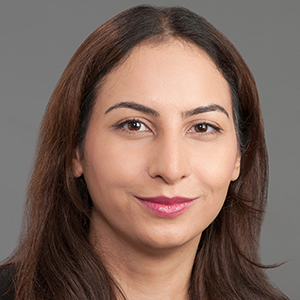
Morse Scholar Alumni 2016–2018
Current Position
Assistant Professor, Pediatrics
Wake Forest University School of Medicine
Contact
About
Arezoo is an assistant professor in the Department of Pediatrics and Center for Artificial Intelligence Research at Wake Forest University School of Medicine.
The focus of her research is on developing innovative and accessible diagnosis and prognosis frameworks for complex disorders. She employs artificial intelligence (AI) techniques, electronic health records and biopsychosocial data in her research. She has a special interest in identifying factors contributing to diagnostic disparities and health inequalities in patients. Her work contributes to the development of AI-assisted pre-screening approaches for complex disorders that can lead to more equitable detection of cases across various patient populations.
Overall, her research offers insights into clinical risks associated with various conditions, brings advancements of AI in genetic research and provides a potential pathway to early diagnosis and intervention.
She received her doctoral degree in biomedical informatics at the University of Wisconsin–Madison.
Education
| 2009 | BS | Computer Software Engineering | Amirkabir University of Technology – Tehran Polytechnic |
| 2011 | BS | Information Technology | Amirkabir University of Technology – Tehran Polytechnic |
| 2012 | MS | Artificial Intelligence | Amirkabir University of Technology – Tehran Polytechnic |
| 2019 | PhD | Biomedical Informatics | University of Wisconsin Madison |
| 2016–2018 | Morse Scholar | Major Professor: Marsha Mailick, PhD | Waisman Center, University of Wisconsin–Madison |
In the News
- The large scope of research on fragile X syndrome at the Waisman Center
July 25, 2023 - Artificial intelligence: A real tool for advancing research on intellectual and developmental disabilities and beyond
July 10, 2023 - Artificial intelligence can accelerate clinical diagnosis of fragile X syndrome
April 9, 2021 - Electronic records pin broad set of health risks on genetic premutation
August 21, 2019 - Using artificial intelligence for a big impact on neurodevelopmental research
June 27, 2018 - Machine learning can detect a genetic disorder from speech recordings
June 12, 2017



Selected Publications
Movaghar, A., & Thompson, L. A. (2024). Artificial Intelligence Chatbots and Their Influence on Learning. JAMA pediatrics, 178(6), 632. https://doi.org/10.1001/jamapediatrics.2024.0314
Movaghar, A., Page, D., Brilliant, M., & Mailick, M. (2022). Advancing artificial intelligence-assisted pre-screening for fragile X syndrome. BMC medical informatics and decision making, 22(1), 152. https://doi.org/10.1186/s12911-022-01896-5
Movaghar, A., Page, D., Brilliant, M., & Mailick, M. (2021). Prevalence of Underdiagnosed Fragile X Syndrome in 2 Health Systems. JAMA network open, 4(12), e2141516. https://doi.org/10.1001/jamanetworkopen.2021.41516
Mailick, M. R., Hong, J., Movaghar, A., DaWalt, L., Berry-Kravis, E. M., Brilliant, M. H., Boero, J., Todd, P. K., & Hall, D. (2021). Mild Neurological Signs in FMR1 Premutation Women in an Unselected Community-Based Cohort. Movement disorders : official journal of the Movement Disorder Society, 36(10), 2378–2386. https://doi.org/10.1002/mds.28683
Movaghar, A., Page, D., Saha, K., Rynn, M., & Greenberg, J. (2021). Machine learning approach to measurement of criticism: The core dimension of expressed emotion. Journal of family psychology: JFP : journal of the Division of Family Psychology of the American Psychological Association (Division 43), 35(7), 1007–1015. https://doi.org/10.1037/fam0000906
DaWalt, L. S., Taylor, J. L., Movaghar, A., Hong, J., Kim, B., Brilliant, M., & Mailick, M. R. (2021). Health profiles of adults with autism spectrum disorder: Differences between women and men. Autism research : official journal of the International Society for Autism Research, 14(9), 1896–1904. https://doi.org/10.1002/aur.2563
Movaghar, A., Page, D., Scholze, D., Hong, J., DaWalt, L. S., Kuusisto, F., Stewart, R., Brilliant, M., & Mailick, M. (2021). Artificial intelligence-assisted phenotype discovery of fragile X syndrome in a population-based sample. Genetics in medicine : official journal of the American College of Medical Genetics, 23(7), 1273–1280. https://doi.org/10.1038/s41436-021-01144-7
Mailick MR, Hong J, DaWalt LS, Greenberg JS, Movaghar A, Baker MW, Rathouz PJ, Brilliant MH. (2020). FMR1 Low Zone CGG Repeats: Phenotypic Associations in the Context of Parenting Stress. Frontiers in Pediatrics, 8:223. doi: 10.3389/fped.2020.00223. PMID: 32478017; PMCID: PMC7240007.