
Past Event Category: Fragile X Syndrome
-
 Sep 30Transition Talks Tuesdays – Wisconsin Technical College System
Featuring: Wisconsin Technical Colleges
Virtual Meeting
Register Here About this Training: The Wisconsin Technical Colleges support youth and families during the transition to adulthood by offering a variety of post-secondary programs, including technical diplomas, degrees, and certificates, which can lead to competitive integrated employment and community integration. Through partnerships with high schools, youth can also access technical college courses to work …
-
 Sep 25But They Get Me! Countering Online Radicalization of Neurodivergent Youth and Adults – In Person Training
Featuring: Ellen Merker, MS, LPC
UW South Madison Partnership, 2238 South Park Street, Madison, WI 53713
Youth and young adults are becoming more and more susceptible to being manipulated into very extreme views online.
-
Sep 23Transition Talks Tuesdays – What’s After High School?
Featuring: Family Voices of Wisconsin
Virtual Meeting
Register Here About this Training: Learn about the transition to adult life for youth with disabilities and special health care needs from Family Voices of Wisconsin. This training covers the role of schools, long-term supports, public benefits, the change to adult health care, supported decision making options and other legal options, advocacy, employment, housing and living, …
-
 Aug 6Looking Beneath the Surface of “Challenging Behavior” – In Person Training
Featuring: Angela Marx, PhD
UW South Madison Partnership, 2238 South Park Street, Madison, WI 53713
Discover alternative models for understanding what challenging behaviors represent and how to best support people who experience them.
-
 Jul 16Trauma’s Influence on the Brain, Body, and Behavior: Promoting Healing and Well-Being – In Person Training
Featuring: Angela Marx, PhD
UW South Madison Partnership, 2238 South Park Street, Madison, WI 53713
This session will highlight the impact of trauma and stress on the lives of individuals with intellectual and developmental disabilities.
-
 Jun 24Humanizing Mental Health – In Person Training
Featuring: Angela Marx, PhD
UW South Madison Partnership, 2238 South Park Street, Madison, WI 53713
If you are a human and interact with other humans, you are “doing” mental health. It is not only something “done” in offices by mental health professionals.
-
 Jun 9Managing Threatening Confrontations – In Person Training
Featuring: Josh Lapin, MSSW
UW South Madison Partnership, 2238 South Park Street, Madison, WI 53713
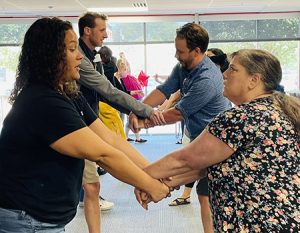
Overview: Managing Threatening Confrontations is designed to assist you in learning how to effectively support individuals who could experience the full range of behavioral escalation. These moments often appear chaotic-when to talk, when to step back, who to call for back up, and “when to duck.” This seminar is designed to put order to the …
-
 Apr 30Recognizing Power Dynamics – In Person Training
Featuring: Amanda Pandl
UW South Madison Partnership, 2238 South Park Street, Madison, WI 53713
Overview: As caregivers, we are in a close and complicated relationship with the individuals we support. We are asked to ensure certain levels of health and safety, while also giving the client the dignity of personhood and autonomy. This complicated relationship can be wrought with disagreements that may lead to power struggles and attempts to …
-
 Apr 23Whose Life Is It, Anyway? – In Person Training
Featuring: Peter Leidy
UW South Madison Partnership, 2238 South Park Street, Madison, WI 53713
Overview: In this training session we will look at power and control in support relationships. Many people being supported feel that others are too often telling them what to do. Many supporters feel that guiding and deciding are expectations of their job or supervisor. We talk about choice all the time, but what does choice …
-
 Feb 26Whose Life Is It, Anyway? – In Person Training
Featuring: Peter Leidy
2238 South Park Street, Madison, WI 53713 UW South Madison Partnership
In this training session we will look at power and control in support relationships. Many people being supported feel that others are too often telling them what to do.