
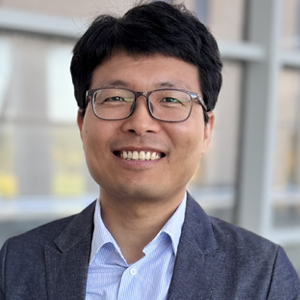
Yu Gao, PhD
Research Assistant Professor
Biography
PhD, University of Copenhagen
Contact Information
Waisman Center
1500 Highland Ave
Room T505
Madison, WI 53705
email: yu.gao@wisc.edu
Research Statement
My scientific interest is to understand the molecular mechanisms that guide development, particularly those governing brain development, neuronal maturation, and neurodevelopmental disorders.
As a postdoctoral fellow and later scientist at the Waisman Center in Xinyu Zhao`s lab, University of Wisconsin–Madison, I investigated genetic and epigenetic mechanisms underlying brain development. My work elucidated how epigenetic regulators, including MeCP2, associated with Rett syndrome, and MBD1, linked to autism spectrum disorder (ASD), control neural development. These studies led to multiple first- or co-first-author publications (Gao and Su et al., Stem Cells, 2015; Gao, Wang, and Eisinger et al., Cerebral Cortex, 2016; Jobe and Gao et al., Journal of Neuroscience, 2017; Sun and Gao et al., Human Molecular Genetics, 2019; Gao et al., Cell Reports, 2020; Gao et al., STAR Protocols, 2021; Gao et al., Hippocampus, 2023), as well as contributions to more than 17 additional publications. More recently, in collaboration with colleagues, I investigated neuronal maturation in the developing primate prefrontal cortex using Patch‑seq and single‑nucleus multiomics. We identified RAPGEF4 as a key regulator of neuronal maturation and showed that CHD8, a major autism risk gene, impairs this process through RAPGEF4 dysregulation, linking disrupted neuronal maturation to ASD (Neuron, Gao, Dong, and Arachchilage et al., 2025). In parallel, I led studies demonstrating that MBD1 controls spatiotemporal gene expression to lead to autism-like behaviors during cortical development. Using single-cell and spatial transcriptomics, mouse models, and CRISPR-based approaches, we established a causal link between dysregulated gene expression, impaired neuronal maturation, and ASD-like behaviors.
In addition, I led and established a platform for identifying cell-type-specific ubiquitinated proteins in the brain. We characterized ubiquitomes in excitatory neurons, inhibitory neurons, and astrocytes. These findings are currently being prepared for publication. Beyond my primary research program, I have contributed to collaborative studies investigating multiple autism-related genes and pathways, including FMR1, FXR1, MAP1B, and RACK1. Collectively, my research integrates developmental biology, epigenetics, genomics, and neuroscience to uncover mechanisms underlying brain development and neurodevelopmental disorders, with the long-term goal of identifying therapeutic targets for neurodevelopmental diseases.