
Throwback Thursday – February 2023
Week 5 – February 2 | Waisman Early Childhood Program
 |  |
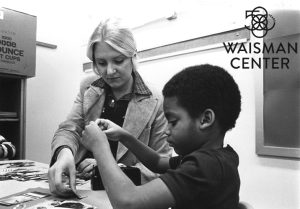 |  |
#TBT The Waisman Center strives to better understand human development and how early interventions may contribute to better outcomes, particularly for children with an intellectual or developmental disability. Some Waisman projects and programs focused on early interventions have included training for parents of children with disabilities, the Waisman Early Childhood Program, the Birth to Three Program in the late 1980s and 1990s, and a broad range of research studies. #Waisman50years
Week 6 – February 9 | Hearing Research
 |  |
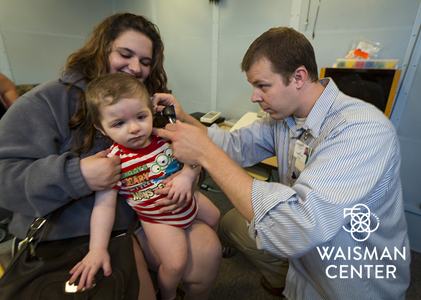 |  |
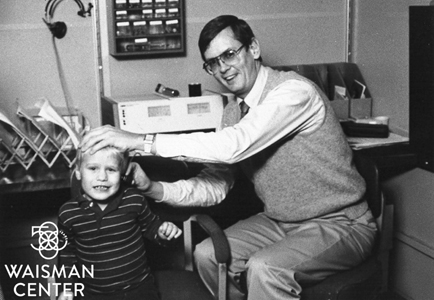
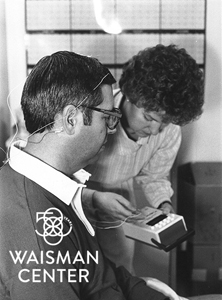
The Waisman Center researches the role hearing plays in communication development; seeks to understand how cochlear implants can support development in children with hearing loss; and provides direct services through its clinics. Photo 1 – Emeritus clinical professor Bob Nellis works with a young research subject. Photo 2 – Early hearing research at Waisman. Photo 3 – A young research participant is checked by audiologist and clinical associate professor, Jon Douglas, while her mother looks on. Photo 4 – Investigator Carrie Niziolek studies speech in people who have aphasia – a condition that limits a person’s ability to comprehend or create language due to brain damage.
Week 7 – February 16 | Visual Research
 | 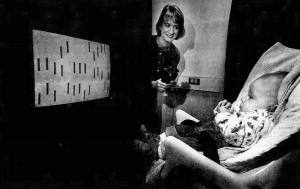 |
#TBT Waisman Center researchers and clinicians are interested in human development. The research of former Waisman investigator, James Dannemiller, PhD, examined the early development of visual attention and basic perceptual processes over the first six postnatal months in human infants. Dannemiller used primarily behavioral methods—observing eye movements in response to the presentation of visual displays. Photo 1 — An image of James Dannemiller from 1999. Photo 2 — The Dannemiller lab worked with infants. #Waisman50years
Week 8 – February 23 | Rare Diseases
 |  |
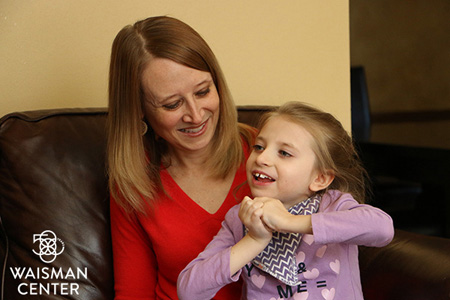 | 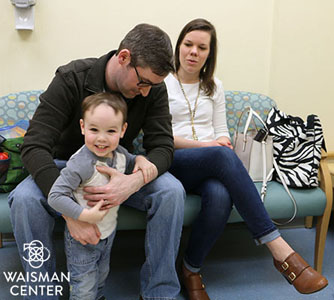 |
Waisman Center scientists and clinicians are involved in research and clinical care for individuals with rare diseases. Some of these rare diseases include Rett syndrome, VLCAD, PKU, and Alexander disease.