
Tribute to Frank L. Siegel, PhD
By Charlene N. Rivera-Bonet | Waisman Science Writer
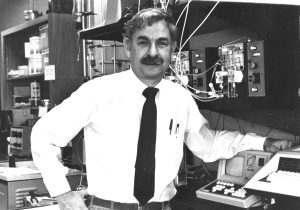
Frank L. Siegel, PhD, was a Waisman Center pioneer. Recruited to the Joseph P. Kennedy, Jr. Memorial Laboratories in 1964 by the late Harry Waisman, MD, PhD, Siegel became one of the founding scientists of the Waisman Center, where he worked until his retirement in 1997. The emeritus professor of pediatrics and biomolecular chemistry passed away on January 1, 2026 at the age of 93.
Siegel was known as an outstanding professor, scientist, and mentor. “Frank was a recognized, important scientist and was someone who brought distinction to the program at the Waisman Center and the university,” says Lewis Leavitt, MD, former researcher clinician at the Waisman Center, medical director of the Waisman Center Clinics, and Siegel’s colleague.
He brought his expertise in biochemistry to study the metabolic disorder phenylketonuria (PKU), and his work contributed to the understanding of how an excess of the amino acid phenylalanine in the blood compromises brain development. He then shifted his focus to birth defects caused by fever at critical stages of fetal and neonatal development, with important findings on the effects of hyperthermia on brain protein synthesis.
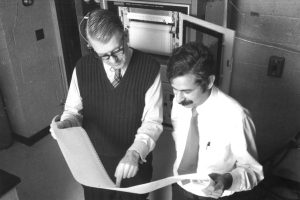
Other areas of research in Siegel’s lab were the characterization of the protein calmodulin, and molecular toxicology. His work was recognized by the prestigious Jacob Javits Neuroscience Investigator Award from the National Institutes of Health, “which is a mark of recognition of excellence in scientific research,” Leavitt says.
Teaching undergraduates, graduate and medical students, and training graduate students and fellows was a source of great satisfaction for Siegel, as he stated in his application to emeritus status. “He was a great scientist and even a better mentor,” says Jeff Johnson, PhD, Vilas Distinguished Achievement Professor of Pharmacy, and former graduate student in Siegel’s lab.
Johnson joined Siegel’s lab in 1987, and the work he did there directly relates to what he is researching now in Alzheimer’s and Parkinson disease. “There’s a real direct tie to that metabolic pathway we studied in Frank’s lab. You could say my whole career started there,” Johnson says.
It wasn’t only the science that had an impact on Johnson’s career, but also Siegel’s mentorship. He helped Johnson, and everyone in his lab, develop independence, run their own projects, and follow their curiosities and new ideas. Being a graduate student in Siegel’s lab “had a huge impact on my career,” Johnson adds. And like him, many other students and fellows who worked in Siegel’s lab went on to have successful and distinguished careers in research and academia at universities across the country, Leavitt says.
His commitment to science extended outside the laboratory and the classroom as he chaired multiple courses in the Department of Biomolecular Chemistry, as well as committees, including the Committee on Faculty Rights and Responsibilities, and the Research and Development Committee in the Department of Pediatrics. At Waisman, he was a unit coordinator of the Molecular & Genetic Sciences Unit, and served on the executive committee.
Siegel retired in 1997 as an emeritus professor of pediatrics and biomolecular chemistry. In retirement, he served on the board of directors of the Friends of the Waisman Center for eight years.