
Ido Haber & Aviad Hai, PhD – Slide of the Week

Title: TI-Toolbox: An Open-Source Software for Temporal Interference Stimulation Research
Legend: TI-Toolbox integrated computational pipeline. A. General workflow. Preprocessing module: DICOM-to-NIfTI conversion via dcm2niix, FreeSurfer recon-all cortical reconstruction, and SimNIBS’s charm for finite element method (FEM) head model generation. Optimization algorithms: flex-search genetic algorithm and exhaustive search approaches for electrode montage determination with region-of-interest (ROI) targeting. Simulation engine: magnitude and direction computation of TImax. Analysis and visualization: ROI extraction, and mesh/volumetric output generation compatible with Gmsh and Freeview. B. Directional analysis of maximal modulation depth with respect to the middle layer of the cortex. C. Results of case study investigation the inter-individual variability in electric field exposure due to anatomical differences using a multiple linear regression model. D. Automatic tissue extraction process from segmented NIfTI files.
Citation: Haber, I., Jackson, A., Thielscher, A., Hai, A., & Tononi, G. TI-Toolbox: An Open-Source Software for Temporal Interference Stimulation Research. Brain Stimulation: Basic, Translational, and Clinical Research in Neuromodulation. https://doi.org/10.1016/j.brs.2025.103016
Abstract:
Background: Temporal interference (TI) stimulation is a novel non-invasive brain stimulation approach that promises selective targeting of deep brain structures while minimizing off-target cortical stimulation. Despite a growing interest in TI applications, there is a need for integrated computational tools that seamlessly connect neuroimaging data preprocessing through montage optimization, field simulation, and analysis within a unified framework designed for translational and clinical research.
Methods: We developed TI-Toolbox, an open-source software platform that integrates established neuroimaging tools (dcm2niix, SimNIBS, FreeSurfer) with specialized algorithms for TI research. The platform provides end-to-end workflows encompassing structural MRI preprocessing, volume conduction modeling, montage optimization, electric field simulation, and region-of-interest analysis. Both graphical user interface and command-line interface implementations ensure accessibility across user expertise levels. The platform employs containerized deployment via Docker to ensure reproducibility and cross-platform compatibility.
Results: TI-Toolbox successfully automates the complete TI research pipeline, from DICOM conversion through final field analysis. The platform demonstrates robust performance across operating systems and provides standardized workflows that enhance reproducibility. Furthermore, our case studies support the validity of our HD-EEG mapping approach for montage standardization and the need for individualized modeling for exposure assessment.
Conclusions: TI-Toolbox addresses critical infrastructure gaps in TI research by providing researchers with a unified, validated platform that reduces technical barriers and accelerates translational research in non-invasive deep brain stimulation.
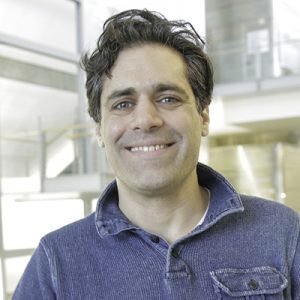
Investigator: Aviad Hai, PhD
About the Lab: The Hai lab focuses on engineering minimally invasive tools to access the nervous system for neurobiological studies of brain function and neurological disorders. We develop electrical, magnetic and electromagnetic sensors for electrophysiology, and for wireless modalities such as functional Magnetic Resonance Imaging, magnetometry and more. We use nano-scale lithography and surface chemistry techniques and combine them with in vitro and in vivo neuroscience towards a broader understanding of the principles underlying neural network activity.