
The newly funded Autism Research Consortium seeks to accelerate timely access to care for autistic individuals
By Charlene N. Rivera-Bonet | Waisman Science Writer
At a glance:
- Lily Wagner, PhD, BCBA, and her team were awarded a HRSA grant to improve timely screening, diagnosis, and access to appropriate services for individuals with autism and their families.
- The new initiative, Autism Research Consortium (ARC) – Systems of Care, will focus on access to early diagnosis and treatment, and transition to adulthood.
- Their four goals include creating a steering committee, conducting research to identify what works well within existing systems as well as barriers, building the workforce through early-career mentorship, and building a sustainable infrastructure that can support the implementation of evidence-based practices.
Researchers at the Waisman Center’s University Center for Excellence in Developmental Disabilities (UCEDD) were recently awarded a grant from the Health Resources & Services Administration (HRSA) to support research to improve the health and well-being of children and youth with autism. The newly funded Autism Research Consortium (ARC) – Systems of Care is an initiative that seeks to improve timely screening, diagnosis, and access to appropriate services for individuals with autism and their families.
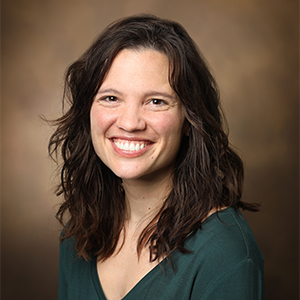
Led by Lily Wagner, PhD, BCBA, director of the Autism and Developmental Disabilities Clinic at the Waisman Center, and in partnership with the Marcus Autism Center in Atlanta, the initiative will identify barriers that prevent the access to quality care and develop strategies to address them.
Approximately 1 in 31 children (3.2%) are diagnosed with autism in the United States. Research shows that early diagnosis and behavioral intervention leads to better outcomes in the lives of children with autism and their families. However, timely access to appropriate care, including early diagnosis and behavioral support, remains a challenge.
“We’re hoping that by identifying barriers, and developing strategies to address those barriers in partnership with the community, we’re going to help families be able to access important services more quickly,” Wagner says.
The ARC focuses on two critical stages in the lifespan: early childhood diagnosis and the transition to adulthood. “Those are two stages where we see a lot of breakdowns in access to services. So, we really want to understand the system-level barriers that are occurring at those points and develop solutions that can make a real difference,” Wagner explains.
The three-year initiative has four major goals.
First, they will create a national steering committee that brings together scientific experts, system leaders, early-career researchers, and people with lived experience. This collaboration will help shape the study design, guide implementation, and strengthen community partnerships.
Second, they will conduct two research studies to accelerate the implementation of evidence-based practices, which incorporate the best scientific information along with clinical experience and patient preference.
The first study will address persistent barriers to early autism diagnosis by supporting the integration of autism family navigation into early childhood systems. Family navigation is an evidence-based practice through which trained navigators help families get connected to autism-related services. Although effective, navigation programs are rarely sustained at scale. This research will explore how navigation components can be integrated into existing systems so more families can benefit from this support.
The second study will address gaps in services for transition-age autistic youth. Many young people with autism lose essential supports once they leave high school and face fragmented and poorly coordinated adult systems. This study will identify the most significant system-level barriers to accessing evidence-based practices during the transition to adulthood and co-design strategies to improve continuity of care.
The third goal of the ARC will seek to expand the autism workforce by providing structured mentorship and hands-on learning for early-career investigators and trainees. This includes skill building in implementation science, stakeholder engagement, and systems-level problem-solving—preparing trainees to lead the next generation of autism systems research.
Lastly, their fourth goal is to build infrastructure to support the implementation and scale-up of evidence-based practices in systems of care. This includes strengthening national partnerships, disseminating study findings broadly, and developing practical tools for families, providers, and systems to use in real-world settings.
The field, Wagner says, has already identified many evidence-based practices that can significantly improve the lives of autistic individuals and their families. The challenge now is making those practices reliably accessible. “In many instances, we know what works,” Wagner says. “With ARC, we’re working to ensure families can actually get the services they need, when they need them.”