
A legacy of support: Connie Stevens retires after decades of advocacy for families of children with hearing differences
By Emily Leclerc | Waisman Science Writer
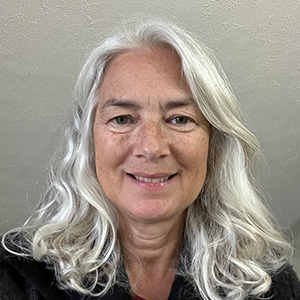
After more than two decades of advocacy, collaboration, and compassionate support for families of children with hearing differences, Connie Stevens, MA, retired at the end of June 2026.
A veteran support parent with Parents Reaching Out, a longtime collaborator with Wisconsin Sound Beginnings, and trusted voice for families across the state, Stevens leaves behind a legacy defined by connection, empathy, and impact.
“Connie’s commitment to this work has been so clear and she has impacted so many families over the years,” says Meredith Vitaioli, director of the Children’s Resource Center (CRC) – South and current program manager for Parent’s Reaching Out. “She should be so incredibly proud of all the things she has done.”
A personal journey that shaped statewide effort
Stevens’ path into this work began with her daughter, Tess. Born in 1998 with Down syndrome and by the age of nine months, officially diagnosed as deaf.
Around the same time, in 2000, Wisconsin was launching Wisconsin Sound Beginnings (WSB), the state’s Early Hearing Detection and Intervention program that ensures all newborns receive hearing screenings, timely diagnostic evaluations if needed, and early intervention. Prior to WSB, children with hearing differences were not diagnosed until the age of 2 ½ and older when speech delays and behavioral issues started to appear. The Waisman Center’s University Center for Excellence in Developmental Disabilities (UCEDD) has been involved with WSB since its conception in helping to train and support personnel.
As Stevens sought resources and supports for her own family, she became involved in WSB’s early efforts to better understand what families truly need after a diagnosis. Stevens was asked to be a part of several panels and conferences to bring the parent perspective to WSB.
“After addressing what children and the Birth to Three providers needed, WSB then started to figure out what parents needed, what the families needed,” Stevens says. “I was on a panel called Where Do We Begin where we answered questions about what parents need after having a child who is deaf or hard of hearing. And it has all just developed from there into these support networks for parents.”
Building systems and community
As WSB grew and developed, especially its resources and supports for parents, Stevens was there every step of the way. From writing several editions of a resource notebook, to being on several boards, to helping develop parent support networks, to being on conference planning committees, she had her hand in everything.
“Statewide she has had a very big role in developing the projects that reach out to provide support to families in addition to building the intervention systems as they are always based on working with the parents or caregivers and child together. When she came on we were working from the ground up around the initiative for Early Hearing Detection and Intervention and she was our parent partner in that work,” says Linda Tuchman-Ginsberg, PhD, former program director of UCEDD’s Early Intervention Program at the Waisman Center. “She was there for building the workforce and was instrumental in building all of the structures that were bringing parents together for support. She has been at the table since the beginning.”
A heart for parent-to-parent support
One of her biggest contributions has been her crucial role in building and establishing Parents Reaching Out (PRO). PRO is a program that is part of WSB but housed and administered through the Waisman Center. It connects new parents of children with hearing differences to experienced Support Parents who can provide emotional support, resources, and act as a guide through the child’s first few years of life.
PRO reaches out to the families of every infant that is diagnosed with hearing differences through WSB to ask if they would like to be connected to a Support Parent. It is a voluntary program but it is available to every family. After being a key contributor to PRO’s development throughout 2017 and its official launch in 2018, Stevens has been a lead Support Parent for the program since then.
“Connie is one of the most authentic people I know, especially in her work. Her job is to show up as a parent to a child with hearing differences, even though Tess is an adult now. She can say, I have been there,” Vitaioli says. “It can be emotional talking with a family that has a newborn baby that they just found out has a hearing difference. Then Connie is on the other end of the phone saying everything is going to be okay. I know why she has been so successful in her career providing family-to-family peer support, because she brings such calm, even-keeled, consistent, and authentic energy.”
Over the past 26 years, Stevens has not just watched WSB grow but she has influenced and helped shape its evolution. She has helped countless families while also being able to help her own. “Part of why I stayed with this work for so long is all of the ways I was finding to help Tess. Not only was I able to help so many others but I was helping my own family as well,” Stevens says. “That and I have had great supervisors, an amazing Support Parent team, great collaborators, and I deeply enjoy connecting with the families.”
Looking ahead
As Stevens retires, she leaves behind not only a strong and sustainable program, but also a community that will carry her work forward.
“I always say that when you come in on the edge of something new because you believe in it, you never know where it’s going to go. But she persisted. She could have left and done different work any time she wanted but she believed in it,” Tuchman-Ginsberg says. “She probably doesn’t see herself as the big wig who stood up there to promote the work; however, she was a very important player, and by continuing to show up, work hard and maintain her commitment, she made a huge difference.”