
In memoriam, Paul Rathouz, former Waisman executive team member and collaborator
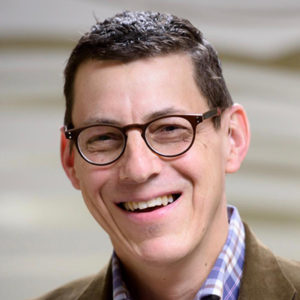
Paul Rathouz, PhD, former Chair of the Department of Biostatistics and Medical Informatics, passed away from complications of multiple myeloma on Wednesday afternoon, December 10, 2025.
Paul served with distinction as the chair of the Department of Biostatistics and Medical Informatics from 2010-2017. He will be missed by those who knew him.
Paul leaves behind his beloved daughters, Annika and Hanna Lou, sisters Georgianne and Maggie, brothers Mark and John, stepmother Dee, several nieces and nephews, and many other loved ones.
Paul received his PhD in Biostatistics from Johns Hopkins University in 1997.
His academic career spans being assistant and associate professor at the University of Chicago Department of Health Studies; Professor and Chair of the Department of Biostatistics and Medical Informatics at SMPH; followed by the positions of Chief of the Division of Health Informatics, Data Science & Epidemiology and Founding Director of the Dell Medical School Biomedical Data Science Hub.
Before he started his academic career, Paul served as Peace Corps Mathematics and Teacher Training at the Bambari High School in the Central African Republic. He served another year in the Central African Republic as a School Health Education Coordinator for the National AIDS Prevention Program.
He had experience as a public health analyst in the Alcohol, Drug Abuse and Mental Health Administration for DHHS, as well as a biostatistics intern in the HIV branch of the CDC Center for Infectious Diseases.
He was honored by being named a Fellow of the American Statistical Association in 2015. In 2003, he received the James E. Grizzle Distinguished Alumnus Award for outstanding contributions to biostatistical methodology, consulting, and/or teaching by his master’s degree alma mater, the University of North Carolina-Chapel Hill Department of Biostatistics.
Paul’s methodological research interests included estimating functions, errors in regression covariates, missing data in highly stratified studies, applied health econometrics, and behavior genetics (especially twin studies). While at Dell Medical School, he conducted research in generalized linear models,; the analysis of longitudinal, multivariate, or clustered data; outcome-dependent sampling, and other sampling problems related to missing data; and cluster randomized trials.
Paul was particularly interested in developmental psychopathology, epidemiology, and health services research.
In addition to his impressive scientific and leadership accomplishments, Paul led a full family and social life. He had a broad circle of friends, and contributed immensely to the lives of many people, both professionally and personally.
We miss him.
“I first met Paul in 2015 through his leadership role with ICTR and the Waisman Center. We ended up working closely together on several large joint projects that spanned the past 10 years, and continued even after he moved to Texas. I will be forever grateful for Paul’s brilliant contributions to my longitudinal research on communication development in children with cerebral palsy. He shared innovative statistical approaches, methodological insights, and a keen ability to convey complicated information in an accessible way, among many other things. Paul undoubtedly changed the course of my work, and elevated it in ways that I couldn’t have imagined. Paul was deeply dedicated to the advancement of others. He was a selfless leader, mentor, colleague, and friend to many people. He approached everyone and everything with humility; nothing was below him. And of course there was his trademark dry, slightly snarky, sense of humor. Paul valued his role as a father above all else. His two daughters, Hannah Lou and Annika, were the light of his life. I am honored to have known Paul as a dear friend and colleague. He leaves a lasting legacy at the Waisman Center.”
~ Katie Hustad, Waisman investigator
Ways to honor Paul
If you wish to send condolences to the family, you may mail them to:
5001 Ave. H
Austin, TX 78751
Donate to:
–a local food bank
–Travis Lilley Fund, which was established in the memory of a former PhD student of Paul’s (giving.utexas.edu, designation Lilley)
Donate blood or platelets to help cancer patients