
Building the Waisman Center’s window to the world: Website manager Linda Rowley retires after more than 30 years of keeping the center online
By Charlene N. Rivera-Bonet | Waisman Science Writer
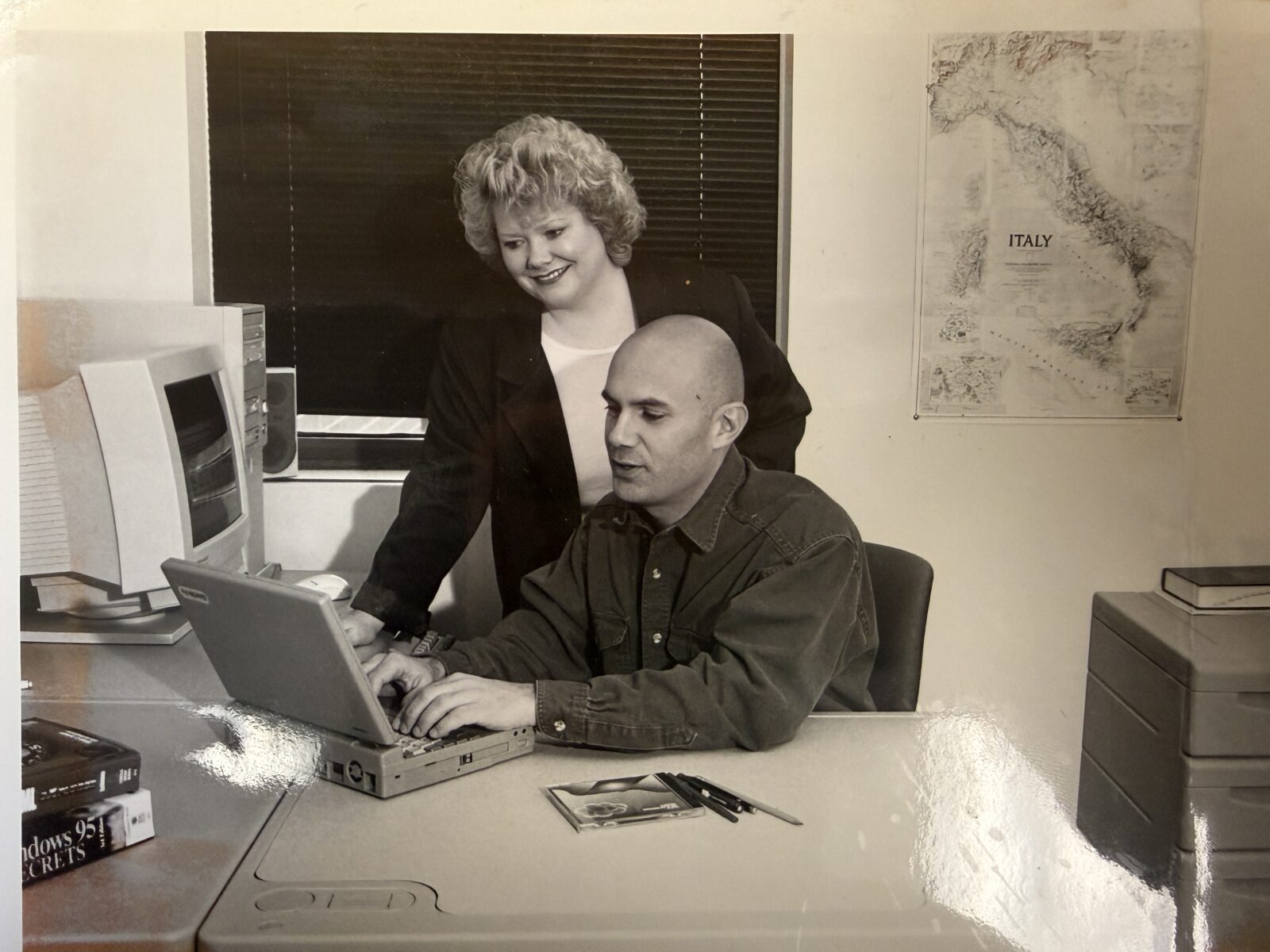
When the internet was just in its infancy, circa 1991, Linda Rowley was already envisioning how it would change the lives of families of children with disabilities. As a mother of a child with disabilities herself, she knew the hardships of finding resources and information, and the value of connecting with other families. She not only saw a solution for that, but pioneered it 30 years ago on the world wide web.
Rowley, who managed the Waisman Center website for 30 years, retired this July, but not before ensuring the website was set up for its most recent update.
Becoming an expert
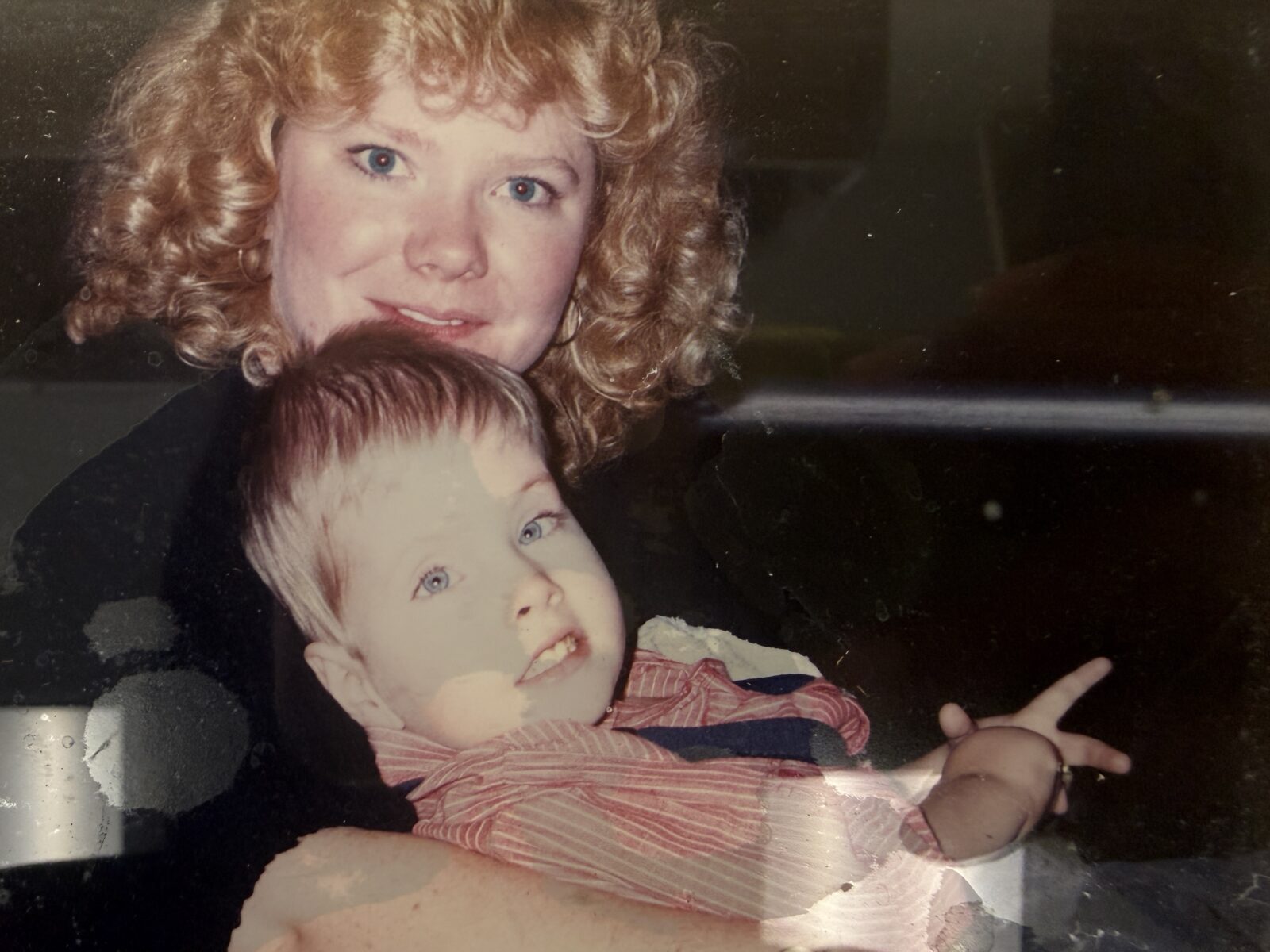
Rowley learned that her son, Mitchell, had spina bifida on the day he was born. He spent almost half of the first three years of his life in the hospital, with 12 surgeries just in the first year. From respite care to wheelchairs to health insurance, Mitch needed multiple supports that Rowley had to, in the era of no internet, figure out how to get. “One of the biggest things for me was just trying to find out, when my son was younger, about what resources were out there and available to us,” Rowley says. “I didn’t know anything about social services. I didn’t know anything about Medicaid or any of the programs out there. I mean, I was clueless.”
Still, she persisted. With deep dives into library bibliographies, attending talks from researchers and physicians on spina bifida and related conditions, and curating lists of other families to connect to, Rowley slowly became an expert not just on how to care for her son, but also on how to support others in the process of caring for loved ones with disabilities. Expertise that brought her to the Waisman Center.
The early years at Waisman
Rowley’s first years at the Waisman Center started through a program called First Step where they put together a directory of services such as information and referrals for families of children with disabilities. “As a parent, it was always frustrating to me that it was so hard to find information about supports that were available, so working on that project was so exciting for me,” Rowley says. The challenge, however, was that people needed to know about their program, know about what they needed, and call them in order to get information. Many services remained unknown to families.
Around the time she was working on First Step, the internet was starting out. “And at that time, there were things called bulletin boards,” Rowley explains. “And I remember learning about those and thinking, wouldn’t that be great if we could put all of our information up on an electronic bulletin board that families could look at?” She had begun brainstorming ideas on how to use the internet to benefit individuals with disabilities.
As a side, personal project, while working on First Step, Rowley started making what she calls “a list of lists,” a collection of contact information of families with children with disabilities. “What I found out over time and spending so much time in the hospital is that parents find out more about the service system from other parents than they do from a lot of the people that work in the system,” she says.
This list got published and it reached the eyes of Terry Dolan, PhD, then director of the Waisman Center. He was surprised to find out that the person maintaining the list was a parent who already worked for him.
Family Village and going online
Dolan had been tasked by the Kennedy family to come up with a way their foundation, which supported families of individuals with disabilities, could promote the use of the internet by families. He gathered a group of 20 parents of individuals with disabilities and asked for their insights. Rowley had many.
“So, I got hired, and we developed the idea of a family village,” Rowley narrates.
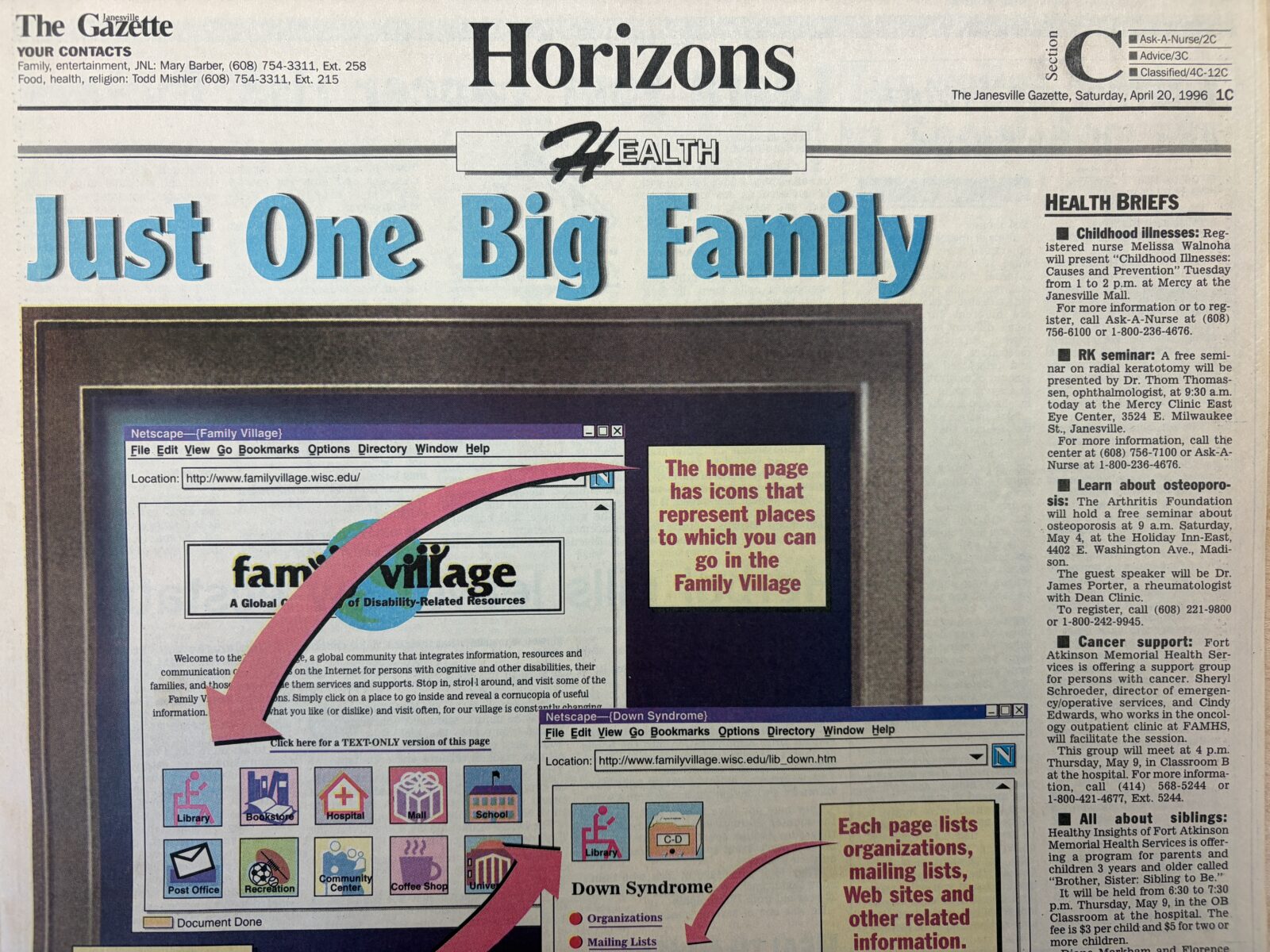
Family Village became a big hit. It was a website that contained a library full of card catalogs. You could go into a catalog and look up a diagnosis and obtain vetted information on disabilities. For example, for Down syndrome, site visitors could access information on national organizations, research articles, and a listserv of families.
It also contained information about laws related to public education, individualized education plans (IEPs) goals, list of famous people with disabilities, and links to assistive technologies such as beach wheelchairs.
Mitch had back surgery on the day he was born, leaving him with a scar that started on his neck and went all the way down to his lower back. This made it impossible for him to ride home sitting in a regular car seat. He needed an adapted one that would allow him to safely lay on his tummy while still being secured. Rowley could not find a way to access this adapted car seat before it was time to leave the hospital, so Mitch went home on a bassinet strapped to the seat of the car.
Adapted car seats was one of the first resources Rowley added to the Family Village webpage.
Rowley became a pioneer in the disability world for creating a place online where families could find what they needed.
Family Village won many awards, was the topic of multiple news articles, and had her traveling all over the nation making presentations on how to use the internet to support families. “Family Village was really cutting edge,” Rowley says.
Rowley and her colleague Ernie Colantonio would also meet multiple times a year with the Kennedy Foundation, which included Eunice Kennedy-Shriver, Ted Kennedy, Patricia Lawford, Jean Kennedy Smith, to present their work.
“Knowing what I do about being able to track down information using the internet has made me really sensitive to how we build our website,”
Waisman’s window to the world
Six years after Family Village, Rowley was handed the reins of the Waisman Center website. When she started, the website was simple, containing only a few pages with basic information about the center and its mission.
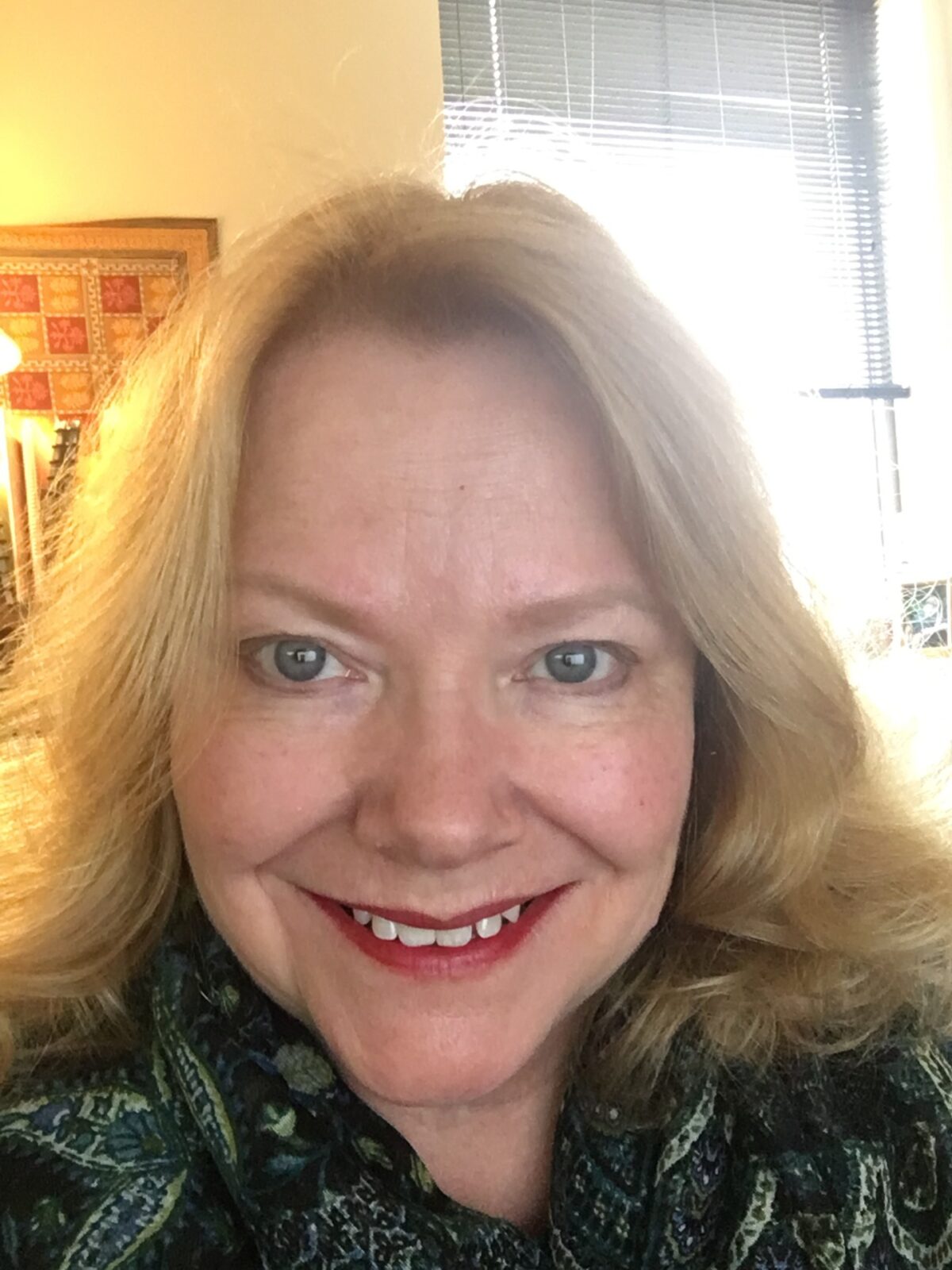
For Rowley, her experience with searching for information for Mitch shaped the way the website was constructed. “Knowing what I do about being able to track down information using the internet has made me really sensitive to how we build our website,” Rowley says. When Mitch was young, Rowley used to dig deep into Index Medicus, a bibliographic index containing medical and biomedical research studies starting from the late 1800’s available in print. She would order articles from the library to learn about the research on spina bifida and its co-occurring conditions. “I’m remembering what it used to be like to try to find out basic information when Mitch was young, 40 years ago, and how far things have come since then, and it’s all because of the internet,” she says.
One of the first updates Rowley made to the website was to add a list of every principal investigator in the center with information about their research. “Families really want to know what’s the research that’s happening,” Rowley says.
The website continued to expand and evolve under Rowley’s care. She introduced new ideas and ways to present information as the capabilities of the web became more abundant. “When it first started, I didn’t know how to write code, but I learned how to write HTML, and HTML at that point in time was 1.1 version. So, I was really early to the game,” Rowley says. “Over time I’ve developed my skills, and then when cascading style sheets came out, I learned how to create cascading style sheets to put styles on the websites and the pages.”
She developed ways to help family access the information they need in more than one way, and advocated to keep the center’s website as accessible and user friendly as possible. Rowley’s belief that the internet could change the lives of people with disabilities truly inspired her to make it not only possible, but also accessible. To her, the internet gave families the ability to find out about the latest research, supports, and treatment options available, , and the ability to connect with families, and to impact public policy.
Right before her retirement, Rowley spent months setting up the Waisman Center website, which is highly complex in terms of how much content it contains, to be smoothly transitioned into a new system.
Looking ahead
For Rowley, it was more of an honor than a task to work at the Waisman Center. “I have never wanted to move on to somewhere else because I just felt like the work that we were doing here was so important, and I’m only a small piece of it,” she says. She found satisfaction in working to make the world a better place for individuals with disabilities.
It was a big plus that Mitch, who is a gifted speaker, got to join her on many of the trips she took to conferences. Alongside Rowley, he gave talks on his experiences with spina bifida, including a talk on how he had learned to take care of as much of his own health issues as possible.
She is now looking forward to spending more time with her son during retirement. Rowley and Mitch are on the market for a new passenger van that would allow them to road trip more comfortably. “[Mitch] wants to go to Indianapolis. He wants to go see the brickyard where the Indy 500 is, and they have wheelchair accessible tours,” Rowley says. They also want to go check out a few ballparks around the country.
Rowley is also looking to pick up some new hobbies like gardening, and volunteering at Hodan Community Services. Still, in retirement, she wants to continue doing what she does best. “I’m hoping to have more time to help other families figure stuff out,” she says.