
Study shows prenatal alcohol exposure may shape drinking behavior later in life
By Charlene N. Rivera-Bonet | Waisman Science Writer
At a Glance
- The longitudinal study done in primates looked at the effects of prenatal alcohol and stress in the brain and behavior of the offspring 20 years later.
- Exposure to moderate alcohol and mild stress in the womb led to changes in the dopamine-based reward system of the brain in the middle-aged offspring.
- Primates exposed to moderate alcohol prenatally showed higher drinking rates as adults.
- The study points to prenatal alcohol exposure as a way alcohol abuse may originate, and reveals dopamine D2 receptors and dopamine transporters as a potential therapeutic target for alcohol abuse recovery.
Prenatal exposure to alcohol may increase the risk of problematic drinking in adulthood according to a new 20 year-longitudinal study done in primates. Researchers found that moderate alcohol exposure in the womb alters the brain’s dopamine-based reward system in ways that may predispose individuals to higher alcohol consumption in adulthood.
While heavy drinking during pregnancy is known to cause long-term neurological and cognitive effects, the impact of moderate alcohol intake (equivalent of two drinks per day) has been far less clear. The study, published in the Journal of Neuroscience, provides new evidence that even moderate prenatal alcohol exposure can shape the development of the dopamine system—a key player in motivation, learning, pleasure, and addiction.

The new research looked at the effects of prenatal stress and alcohol on the dopamine system in the adult offspring, and their alcohol consumption. Mary Schneider, PhD, professor emerita of occupational therapy, kinesiology and psychology, Colleen Moore, PhD, professor emerita of psychology, and Waisman Center scientist Alexander Converse, PhD at UW–Madison, led the study.
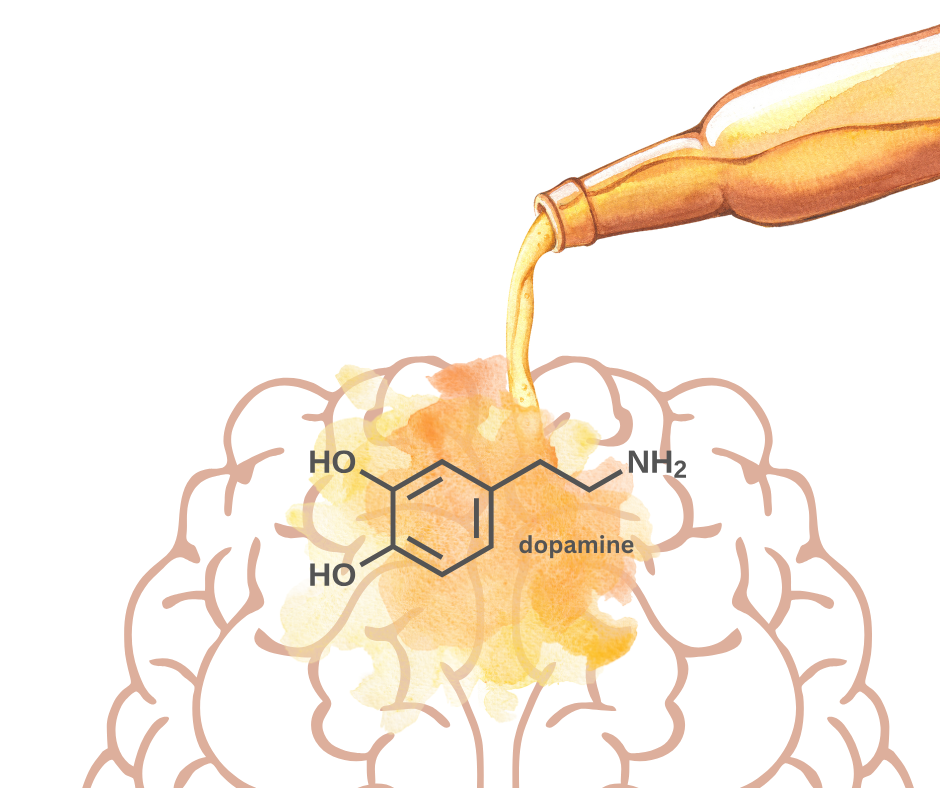
The reward system of the brain, which is in charge of reinforcing behaviors necessary for survival, is run by a neurotransmitter called dopamine. When dysregulated, dopamine can lead to addiction. “The brain is complicated, and there are a lot of neurotransmitters. For alcoholism, there are many potential culprits, but dopamine is a big target for research,” Converse says.
Pregnant monkeys either drank moderate amounts of alcohol, experienced mild stress, had a combination of both, or were part of the control group. When the offspring reached middle age (20 years later), researchers had the opportunity to look at their brain chemistry using positron emission tomography (PET) and measure their alcohol drinking behaviors.
They found that both prenatal stress and alcohol exposures altered the dopamine system in the adult offspring that had not consumed alcohol yet. When given alcohol, the group exposed to alcohol prenatally showed higher drinking rates as adults.
Even though prenatal stress did not lead to increased alcohol consumption, the researchers suggest it is possible that its effect on the dopamine system may have implications for other behaviors. “It just adds to the biological evidence that stress during pregnancy is something that as society, we should try to alleviate,” Converse says.
Having observed changes in both brain and behavior, the next question was if the changes in the dopamine system could predict alcohol drinking patterns. Previous studies have shown that individuals with alcohol use disorder have a lower density of the dopamine D2 receptors. This has been associated with increased craving. “There’s this chicken and the egg question, which we addressed in the paper. PET studies on people with alcohol use disorder have found lower D2 receptor density. Is it because they were born that way, and because they were born that way they drank, or were they born with typical levels, and the alcohol reduced their D2 receptors?” Converse says.
They did PET scans in the adult offspring before and after they drank alcohol at a fixed dose equivalent to 6 drinks per day for four months. “The big thing we found was that low dopamine D2 receptor density in the alcohol naive state predicted faster drinking. And that was in all three brain regions that we looked in. That was a fairly clear signal,” Converse explains. This suggests that there may be differences in the dopamine system that exist before an individual with alcohol use disorder starts drinking that make them more susceptible to addiction. This adds to evidence that the dopamine system, and D2 receptors in particular, are a possible target for potential treatments of alcohol use disorder.
Lastly, in response to these four months of daily fixed dose of alcohol, another part of the dopamine system, the dopamine transporter, changed, but differently for each monkey. “And there was no net effect when looking at the average across all the animals. And you might say it was just measurement noise, but that change correlated with how much they drank at the end of the experiment, when we let them drink as much as they wanted,” Converse says. When the monkeys were allowed to drink freely, some of them drank heavier and some hardly drank. The way their dopamine transporters changed due to a daily fixed dose predicted how they drank when drinking was optional. Converse explains there may be individualized neuroadaptive responses to drinking that might affect who transitions into alcohol use disorder, and this too might be a basis for researching potential pharmacological therapies for alcohol use disorder.
Overall, the study points to prenatal alcohol exposure as a way alcohol abuse may originate, and reveals dopamine D2 receptors and dopamine transporters as a potential therapeutic target for alcohol abuse recovery.