Beyond the bench: Waisman-born clinical trials
By Charlene N. Rivera-Bonet | Waisman Science Writer
AT A GLANCE:
- The Long Journey of Clinical Trials – Scientific discoveries take years to become treatments. Researchers must prove safety and effectiveness through four trial phases, testing interventions on small groups before expanding to larger populations.
- Waisman Center Clinical Trials – Multiple researchers at the Waisman Center have interventions at various phases of clinical trials. These include interventions for several neurodegenerative diseases, and interventions for children with Down syndrome. Waisman Biomanufacturing manufactures biologics for clinical trials phases 1 & 2.
- Improving Lives Through Innovation – Clinical trials help bring new treatments and life-changing therapies to people who need them most. Researchers and companies work together to make medical advancements possible, driven by a shared goal of enhancing patient care.
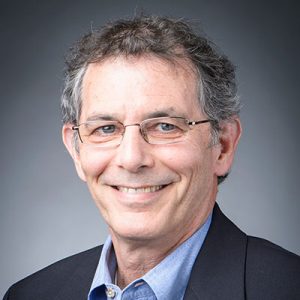
Clinical trials serve as the crucial bridge between groundbreaking laboratory research and the eventual approval of new treatments or interventions. At the Waisman Center, researchers like Albee Messing, VMD, PhD, and David Gamm, MD, PhD have dedicated decades to transforming innovative ideas into potential therapies, now undergoing rigorous testing to ensure their safety and effectiveness. From tackling rare neurodegenerative diseases to pioneering stem cell applications for vision restoration, their journeys highlight the intricate and lengthy process of bringing scientific discoveries from the lab to the clinic.
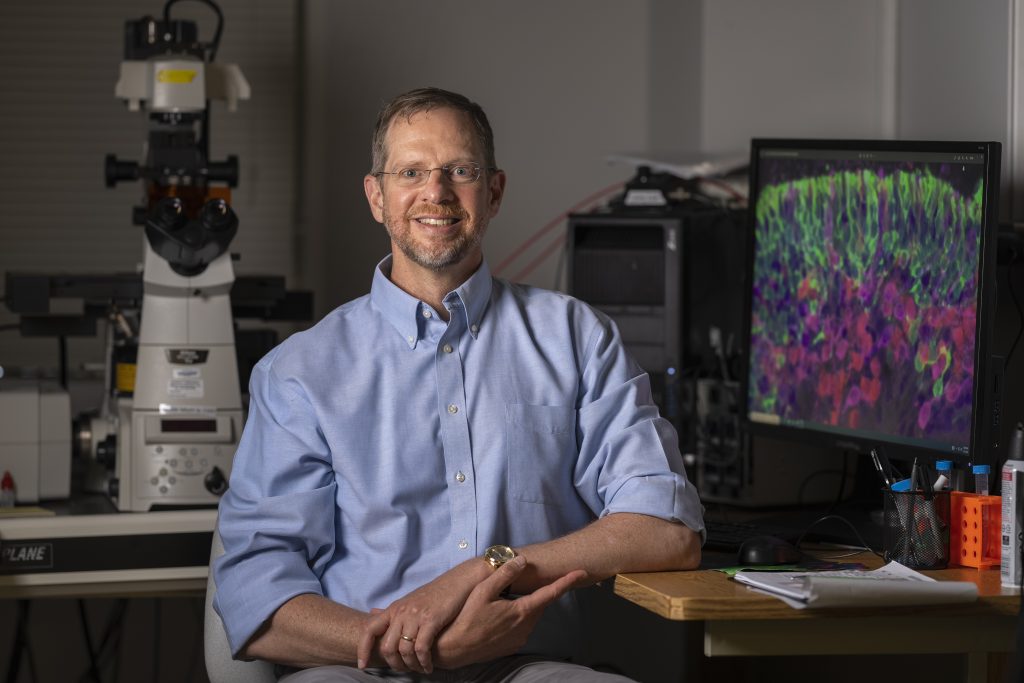
The road to clinical trials can take years, often decades, and the journey through the trials themselves is not much shorter. “We had been thinking about clinical trials for a long time. Well in advance of actually having anything. We really started a deliberate search for treatments, maybe 2003 or 2004,” says Messing, professor emeritus of comparative biosciences, whose intervention for Alexander disease (AxD) is currently in a Phase 1-3 clinical trial. “What is now in clinical trials began coming together as a project in 2013, and by 2016 we had the first real data from the animal work supporting that this idea would potentially work,” he adds.
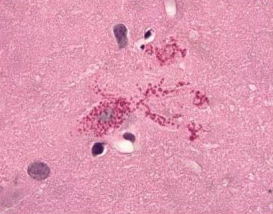
Messing studies the role of the Glial Fibrillary Acidic Protein (GFAP) in the pathogenesis of AxD, a rare and often fatal neurodegenerative disease. Clinical trials on a new treatment for AxD started in 2021 and are expected to be completed in 2029, with the first set of results expected by the end of 2025. The clinical trial, managed by the company IONIS, is evaluating the safety and efficacy of the drug zilganersen in improving or stabilizing gross motor function in individuals with AxD.
In 2003 David Gamm, professor of ophthalmology and visual sciences, had the idea to use human pluripotent stem cells to help patients with retinitis pigmentosa, age-related macular degeneration, and other diseases of the eye that lead to blindness. “At the time, no one knew how to make retinal cells or tissues from stem cells,” Gamm says. About six years later, in 2009, he changed this and patented the ability to make human retina from stem cells. “And at that point, once we knew we could make early human retina, I said, ‘Okay, this could go somewhere’,” Gamm says. “So that’s when it became a real, achievable goal. A lot needed to be done, but it was possible.” 15 years later, he received approval from the Food and Drug Administration (FDA) to take this invention into clinical trials.
Phases of clinical trials – FDA approval
Clinical trials are officially divided into four phases (straightforwardly called Phase 1, 2, 3 and 4). However, there are other steps that need to occur before arriving at Phase 1, with the first being discovery and development, such as Messing and Gamm coming up with an idea and doing the research to determine if it works in animal or cell models.
When working in a university research lab, there is a limited number of experiments you can run, or cells you can produce based on funding, space, and human capacity. This becomes more permissive with a company. Before Gamm started the official process for clinical trials, he created a company called Opsis Therapeutics, where he was able to take his product, stem cell-derived retinal cells, and produce it at a higher scale to make it a commercial product for other researchers to use.
“[Making a commercial product] began in 2016 in collaboration with Fujifilm Cellular Dynamics Inc. (FCDI) and by 2021 we had a process that could achieve that goal,” says Gamm. “So, at that point we knew we had a product that could, with some additional work, get to clinical trial. But we needed a partner to run the clinical trial.”
Opsis Therapeutics and FCDI formed a partnership with BlueRock Therapeutics in 2021, through which Opsis and FCDI would complete the production and testing of the retinal cell products, and BlueRock would run the clinical trials.
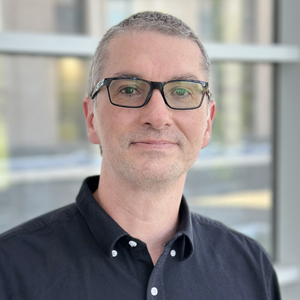
The next step was obtaining clearance from the FDA to initiate clinical trials. Joe Phillips, PhD, co-founder and preclinical director of Opsis and research scientist in Gamm’s lab led all of the non-clinical work leading up to FDA clearance. “Once we had identified and optimized our first final product, stem cell-derived photoreceptors, then there were a lot of studies that we had to do to develop an investigational new drug (IND) package for the FDA, which took over two years to complete,” Phillips says. These studies show the FDA that the intervention meets their rigorous safety testing requirements. Once that is approved, they have permission to initiate Phase 1 of the clinical trial. “That was the most eye-opening part. The extensive experimentation, documentation and reporting that’s required for an IND package to get clearance from the FDA,” Phillips says. “But then the satisfying part is, we successfully did all that and can now move forward with the clinical trial.”
Phases 1 & 2 – A big step to start small
Once a clinical trial is handed off to the company who runs it, researchers serve as consultants in the process, but do not participate in the process of recruitment or data collection and analysis to avoid any bias. “Our role was really just doing the animal work, the preclinical studies, providing the rationale and offering some guidance about what they might be looking for in terms of the molecular markers, but all of the clinical work was out of our hands,” Messing says. “Once we had done all the mouse and the rat work, we’re on the sidelines.”
In cases like Gamm and Phillips with Opsis, they participate by developing, manufacturing, and testing the cells that will be used, then serving as clinical and preclinical consultants where their expertise is needed. For the rest, their role is at arm’s length to avoid conflict of interests.
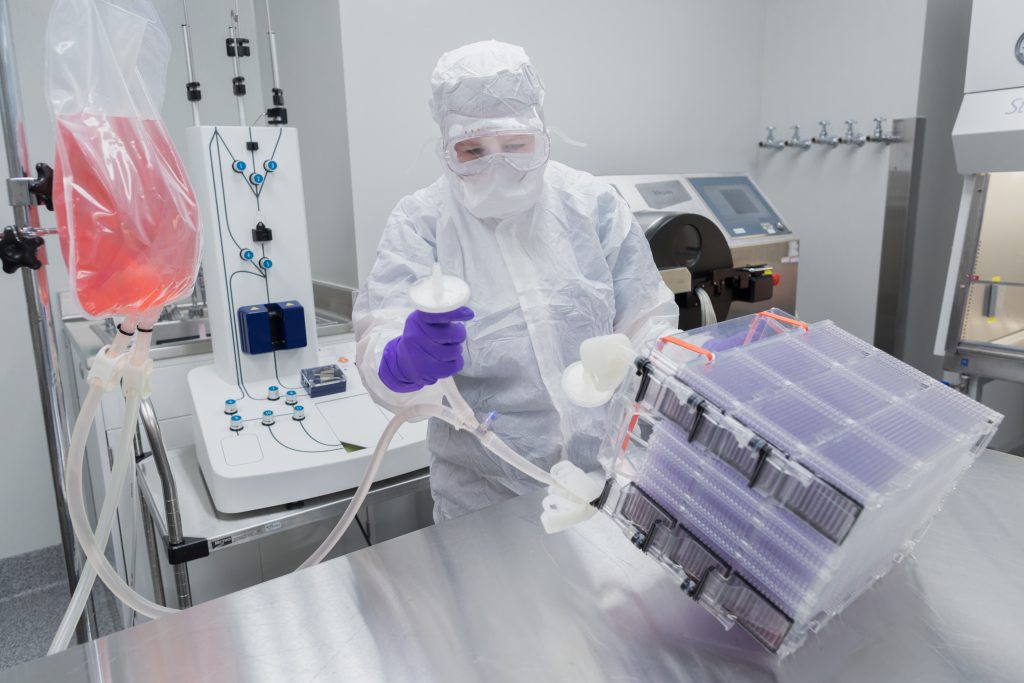
This is where Waisman Biomanufacturing (WB) steps in for many companies or organizations that utilize their services: manufacturing product during Phases 1 and 2. WB’s mission is to accelerate the advancement of novel biotherapeutics and vaccines into clinical trials, which they do by manufacturing biologics such as gene and cell therapies, vaccines, recombinant proteins and plasmid DNA.
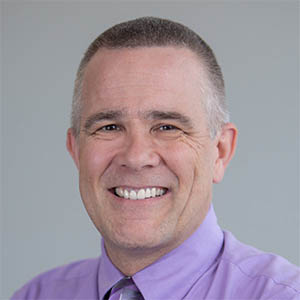
WB specializes in the early stages of clinical trials, with a primary focus on Phase 1, and substantial experience in Phase 2. “We are dedicated to enhancing success rates in Phase 1 by developing products through a ‘quality by design’ approach, ensuring they possess quality attributes and scalability from the outset,” says Christopher Bartley, managing director of WB. “It’s one area where we’ve truly excelled. For WB, the quality aspect is the most critical part of any project, and we collaborate closely with our partners to achieve that.”
Bartley, along with an outstanding team at WB has contributed to numerous interventions such as HIV vaccines, COVID-19 treatments, a skin substitute product, and therapies for prostate and breast cancer, among many others.
Phase 1 begins with a small number of volunteers, seeking to first test the safety of the intervention. Some interventions may be new, but some may be drugs or treatments that have been already in use but are being repurposed, or evaluated in a different population. The biggest focus of Phase 1 is making sure the treatment is safe. Phase 2 involves a slightly larger group of volunteers and evaluates efficacy – testing if the treatment actually works in addition to its safety.
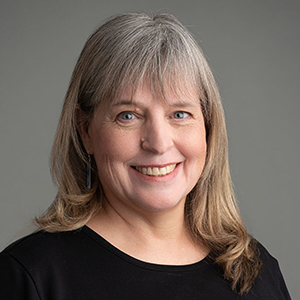
Maria Stanley, MD, developmental behavioral pediatrician, is leading two multi-site trials on interventions for children with Down syndrome at Waisman. The first, currently in Phase 2 is for a medication that is already approved for treating ADHD, but its effects on individuals with Down syndrome remain unknown. “Many people who care for people with Down syndrome have observed that responses to medication don’t always look the same as they do in other populations. And the thought is that the genetic difference that people with Down syndrome have, could be influencing how they respond to medication,” Stanley explains.
Many of the medications that children use have never been studied or approved to be used in children. It is easier, less expensive, and less risky to test it in adults, but “we know kids aren’t just little adults. We know that it doesn’t always work exactly the same way in kids as adults, and when it comes to special populations with a genetic condition like Down syndrome, we have even less information about that,” Stanley says.
“The FDA is primarily concerned with two things during the drug approval process: safety and efficacy,” Bartley says. Only about 10% of products that enter clinical trials eventually make it to the market. “The main reasons for failures in the early phases of clinical trials are safety concerns and lack of efficacy.” Bartley adds, financial constraints, such as companies running out of funding – whether it be private investment or limited federal grants – to continue the trials, also contribute to that failure rate. As a product advances through trials, the costs increase related to the size of the trials and the increased stringency for data from the FDA to ensure those standards are met.
Phase 3 & 4 – Going somewhere
An intervention deemed safe and effective goes on to Phase 3, which typically involves a higher number of participants, compares the intervention to existing treatments or a placebo and gathers data on long-term effects.
Stanley’s second clinical trial tests a hypoglossal nerve stimulator to treat obstructive sleep apnea. “We see obstructive sleep apnea as a modifiable risk factor for cognitive impairment in people with Down syndrome. So, it’s really important to address and treat it,” Stanley says.
The hypoglossal nerve stimulator is an implanted device that pushes the tongue forward to help with breathing during sleep. It has been tested and shown to be successful in individuals as young as 13, but the team believes this could benefit an even younger population. So, we’re looking at implanting the device in folks as young as 10, and it is also looking at how specifically can we see the impact on cognition or language through use of the device,” Stanley explains. The Clinical Translational Core at the Waisman Center participates in this trial by providing the cognitive assessments.
Messing’s study on an intervention for Alexander’s disease is a combined Phases 1, 2 and 3. “It’s such a rare disease, with such a small patient population, they figured it would take too long to go through a Phase 1 with healthy controls,” Messing explains. It would also put healthy controls at unnecessary risk, “when what they really need to do is find out first of all whether the patient population have somewhat different risks because they start out being sick and have a different molecular profile in their brains,” he adds.
Because of how small this patient population is, they extended the trials all over the world, with people participating in Europe, Australia, Japan, Canada, and the United States.
Toward the end of this year 2025, IONIS will release the first set of results that will show whether the intervention is working. “I hope it works. I think the indications are that it’s safe,” Messing says, because the study would’ve been stopped otherwise.
What does it look like for the individuals who are participating? Although each trial is different, many of them have similar structures. For Messing’s study, they divide the participants into two groups for a two-year treatment period. For the first year, one group will receive the treatment while the other receives a placebo. The second year, the placebo group joins the treatment group in an open-label phase in which everyone receives the treatment. At the end of the two years, the results can be analyzed.
Both researchers and participants are unaware of which treatment (actual drug or placebo) each group is receiving – called a double blinded study. This helps reduce bias when reporting symptoms and analyzing results.
Phase 4 begins when the treatment has been FDA approved for commercial use, but monitoring of its side effects continues happening after the drug is commercialized.
Motivation for the long trek
For Messing, it was the long-standing support of his research from the AxD community that pushed him to work toward clinical trials. “From the beginning, we were in very close contact with the patient community, because we relied on their donations of tissues or DNA to do the work. So, I think very early on, I felt a responsibility to them, and certainly a scientific interest. If we could figure out what’s causing the disease, can we also figure out how to treat it, and alter the course of the disease,” he says.
Clinical trials are about finding cures, treatments, and ways to improve people’s quality of life.
“We do what we do because we believe in the potential to improve someone’s life,” Bartley says. “Our ultimate goal is to help those in need, striving to open doors or create avenues for those who aren’t getting the treatments they need.”
Funding sources
Research from the Messing lab that led to clinical trials has been supported by the National Institutes of Health (NIH), Juanma Fund, Rijkaart Fund, United Leukodystrophy Foundation, and Ionis Pharmaceuticals. Gamm’s research on technology development has been funded by the NIH’s National Eye Institute, Foundation Fighting Blindness, McPherson Eye Research Institute, Retina Research Foundation, Fighting Blindness Canada, U.S. Department of Defense, Trout Family Endowment, and Research to Prevent Blindness. Gamm’s preclinical work and the clinical trial has been sponsored by Opsis Therapeutics, Fujifilm Cellular Dynamics Inc. and BlueRock Therapeutics (a subsidiary of Bayer AG). The clinical trials led by Stanley are supported by Duke University and the Massachusetts Eye and Ear Infirmary.