
The Waisman Center hosts a successful first Day with the Experts on Congenital Heart Defects
By Charlene N. Rivera-Bonet | Waisman Science Writer
At a Glance:
- The Waisman Center, in partnership with UW Health Kids, hosted the first Day with the Experts focused on congenital heart defects, featuring health care professionals and individuals with lived experiences.
- The three talks covered motor and language development in the early years after congenital heart surgery, neurocognitive outcomes in school-age kids, and transition to adult healthcare.
- A panel of individuals with lived experiences included an adult and a teenager with CHD, and two mothers of younger children with CHD sharing their experiences with the condition.
- Recordings of the event can be accessed here.
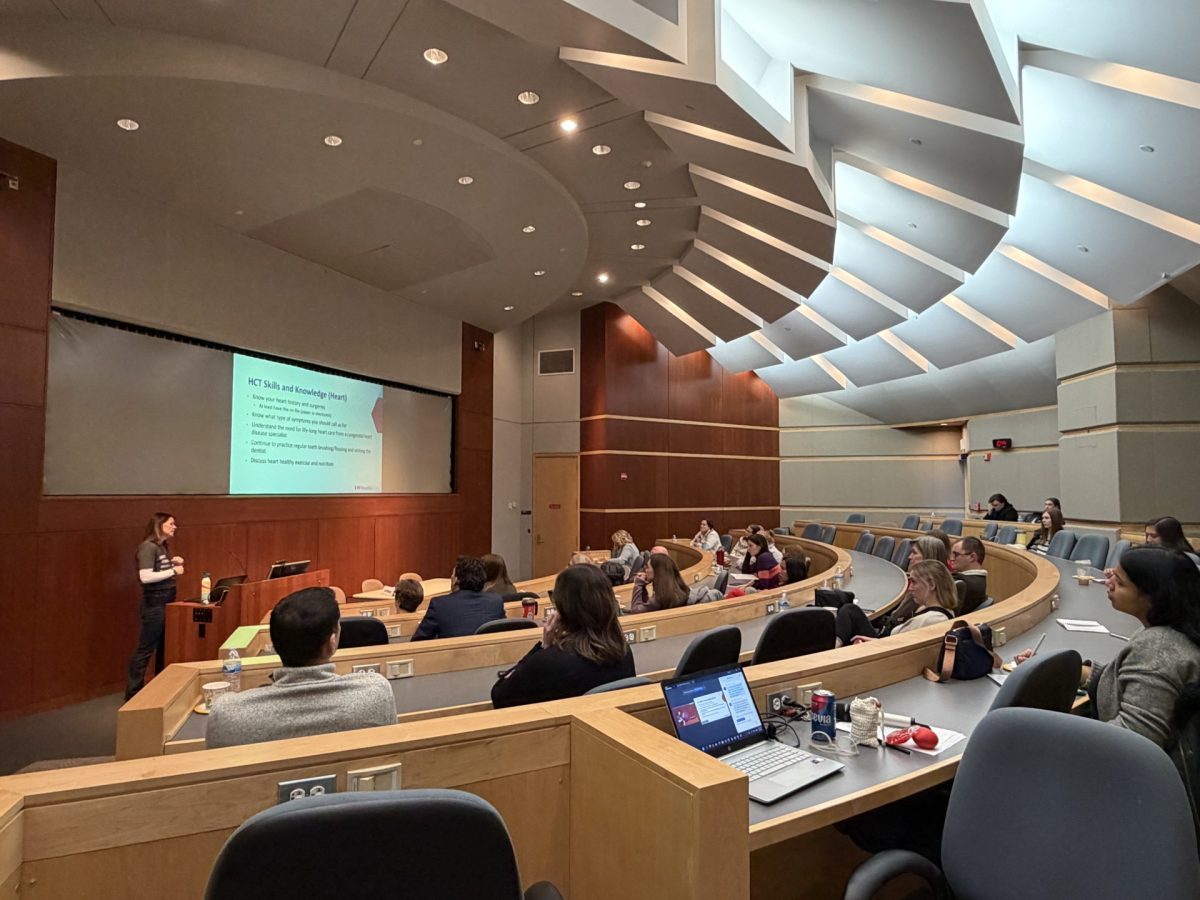
On the first day of Congenital Heart Defects (CHD) Awareness Week, Waisman Center and UW Health Kids experts gathered to share their knowledge on the neurodevelopmental outcomes of congenital heart surgery with the community.
This first-ever Waisman Center Day with the Experts focused on CHD featured health care professionals and a panel of individuals with lived experiences. The talks covered motor and language development in the early years after congenital heart surgery, neurocognitive outcomes in school-age kids, and the transition to adult healthcare, with information and practical advice for individuals and families in all stages of their journey with CHD.
Congenital heart defects are the most common birth defects affecting 1% of babies. Children born with critical CHD require heart surgery and other interventions before they turn one.
In 2012, the American Academy of Pediatrics started recommending surveillance of children who had undergone congenital heart surgery for known neurodevelopmental impacts such as cognitive, social, emotional, and behavioral challenges. “It wasn’t until about 30 years ago that we started recognizing that there were cascading impacts of having heart surgery on a child’s development and mental health over time,” says Jesse Boyett Anderson, MD, pediatric cardiologist at UW Health Kids and the Waisman Center’s Brain Care Clinic, who led the event.
Unfortunately, not all children with CHD get a developmental evaluation and receive the services they need to reach their full potential. Boyett Anderson’s work inside and outside the clinic seeks to improve the developmental outcomes for those kids.
The Day with the Experts: Congenital Heart Defects was created as a way to connect parents and caregivers with information about how they can support their child’s development. As an added bonus, it provides a space for those parents and caregivers to connect with each other.
The first talk, by Nicole Currey, PT, DPT, PCS, and Michelle Swain, MS, CCC-SLP focused on early childhood issues related to language, feeding, and motor development.
Children with CHD often present gross and fine motor delays, and language differences such as expressive or receptive language delays. These issues, they pointed out, reflect how the brain develops under medical stress, not a child’s potential or a parent’s effort. Physical therapists and speech-language pathologists like Currey and Swain, respectively, can be involved early on to help address these challenges, and parents can play a critical role by observing, monitoring, and advocating for evaluations when needed.
Jonathan Mietchen, PhD, and Karen Carpenter, MS, CRC, LCP, followed with a presentation on neurocognitive outcomes, mental health needs and school supports for school-aged kids with CHD. Inattention, slow processing speed, executive dysfunction, and mental fatigue are common neurocognitive challenges in kids with CHD. They may also experience anxiety and depression. Mietchen and Carpenter presented ways to support kids in collaboration with their schools.
During the last of the talks, Briana Swanson, APNP, and Tim Markle, MA, presented tips for the transition from pediatric to adult health care. CHD requires lifelong care, and a smooth transition from the pediatric to adult healthcare system can prevent gaps in care. Given it is a multi-year, multi-layered process, this transition can be challenging. Swanson and Markle talked about preparing for the transition process, transferring the care from pediatrics, and fully integrating in to the adult health care system.
The event ended with an expert panel of individuals who know the most about living with CHD: patients and family members. “I’ve never seen any event like this before,” says Andrew Higgins, who was part of the panel. “So, I thought I’d share what I know.”
Higgins is the lab manager for the Brain Imaging Core PET Lab at the Waisman Center. He has a CHD called tetralogy of Fallot. “It was pretty apparent [at birth]. I was blue and I failed the Apgar,” Higgins says.
His first corrective heart surgery was at two weeks old, then at two years old, and the last at age 12. “And aside from yearly checkups with my cardiologist, there’s not a whole lot that’s different between myself and somebody else,” he explains. Except maybe that he can’t run as far, he jokes.
Higgins shared his experiences living with CHD and his struggles with the transition from pediatric to adult health care, particularly dealing with cardiologists that did not specialize in CHD. “You’ve got to be your own health advocate. Especially when transitioning from a pediatric cardiologist to an adult cardiologist. Not very many cardiologists specialize in congenital heart defects, so if they don’t know about them, they’re going to treat you like any random person,” he says.
He also offered words of hope and advice for parents and patients that are earlier in their journey with CHD. “Medicine has come a long way, even in my 35 years and it’s very treatable, and the children can live virtually normal lives,” Higgins says.
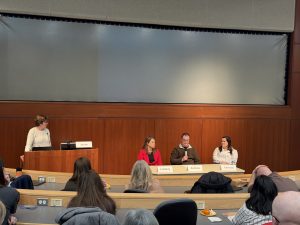
Joining him in the panel were also a teenager sharing his story with CHD, and two mothers of younger children with CHD talking about their experience from a caregiver perspective. “They grounded the whole event. They provided the boots-on-the-ground, lived experience of what it means to parent a child with congenital heart disease, or to be an adult who’s lived through those events,” Boyett Anderson shares.
In terms of the overall event, she hopes attendees took away three main things: “One is that you’re not alone. Two is that there are particular concerns that you should be on the lookout for, and that if your child is struggling with these things, it’s not your child’s fault. These are anticipated sequelae of the medical diagnosis and the medical treatments that they received. And three is, there are things that you and we can do to help,” Boyett Anderson says.
The Day with the Experts on CHD was hosted at the Waisman Center, which houses the Pediatric Brain Care Clinic, directed by Peter Ferrazzano, MD. At this clinic, Boyett-Anderson, Ferrazzano, and more healthcare specialists provide follow-up care for children after congenital heart surgery including cardiology, neuropsychology, physical therapy, and more.
The event was a partnership between the Waisman Center and UW Health Kids.
Recordings can be accessed for free here.
Share on: