
Not lost in translation: New research finds that kids can learn easily from codeswitched language
By Emily Leclerc | Waisman Science Writer
At a Glance:
- Not much is understood about how codeswitching–going back and forth between different languages while speaking—impacts language learning and development in children.
- A new study found that kids, even those with differing language abilities, were able to learn nouns and verbs at almost identical rates from codeswitched and not codeswitched input.
- The study, although preliminary, may help reassure bilingual parents that codeswitching with their kids is not going to harm their language development and to keep engaging with their children as much as possible.
- Expanding this research to include kids with developmental disabilities may help develop more effective interventions for kids growing up in bilingual houses that struggle with language development.
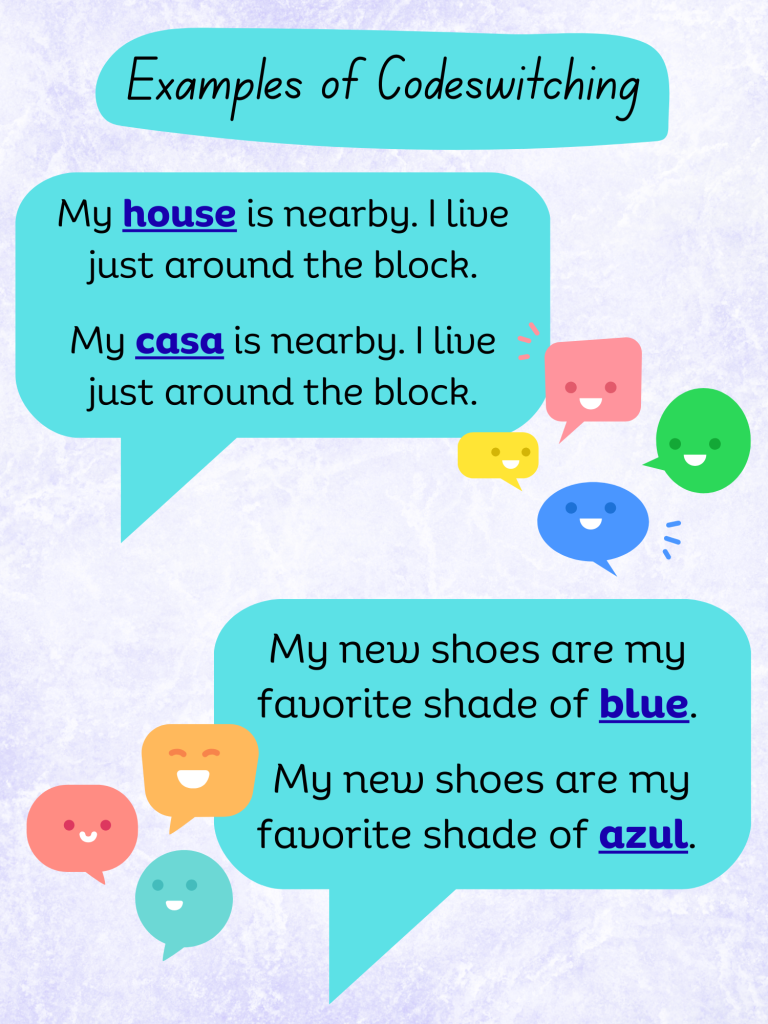
Codeswitching–when someone switches between two or more languages while speaking–is a very common phenomenon in people who are bilingual. ‘Spanglish’ is a well-known example of codeswitching as it is a colloquial term for speaking in a mix of Spanish and English. Not much is known however, about how language development in kids is affected by learning language from parents who codeswitch. New research from the lab of Waisman investigator Margarita Kaushanskaya, PhD, professor of communication sciences and disorders at UW–Madison, found that kids are able to learn new words at similar rates from codeswitched and not codeswitched input, adding evidence to suggest that codeswitching is not detrimental to a child’s language development.
Millions of kids around the world grow up in bilingual households. The vast majority of the time, this means the child will grow up learning both languages essentially simultaneously. But how does codeswitching, or flip-flopping between languages, impact how a child learns language?
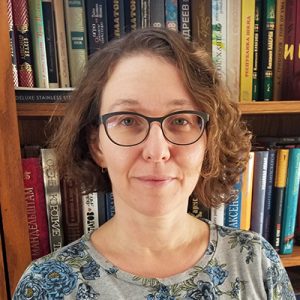
“Codeswitching is so prevalent and is very typical of how bilinguals communicate. It has been at the center of bilingualism research for a very long time, frequently from two perspectives,” Kaushanskaya says. “One that attempts to capture how it happens in real, naturalistic settings and the factors that drive it. The second takes the perspective of how do bilingual speakers actually process this kind of information that contains a mix of two languages. But very little is known about what happens when people learn from codeswitched input.”
Kaushanskaya, along with authors Emma Libersky and Caitlyn Slawny, MS, CCC-SLP, who are both doctoral students in Kaushanskaya’s lab, decided to investigate to help start to fill in the research gap. Their new study, which was published open access in the journal Infant and Child Development, examines whether children’s learning of both nouns and verbs was impacted by codeswitching , while also taking language ability into account.
It is significantly more common for bilingual people to codeswitch on nouns rather than verbs. “Verbs are much more difficult to move across languages because they carry with them all sorts of syntactic complexity and structure information that needs to be taken into account,” Kaushanskaya says. Nouns tend to have a lot more freeform and don’t have nearly as much restriction in sentence construction as verbs. But the study team felt it important to include verbs because they are typically harder for kids to learn in general and have the potential to be more heavily impacted by codeswitching.

Language ability looks at a child’s overall language skills. “It’s not specific to any one language, but how they understand and use language generally,” Slawny says. “For a bilingual kid, that would mean their language ability across both languages, whereas for a monolingual kid it would just be the one.” The concern is that kids with lower language ability, like those with developmental language disorder, might struggle more to learn from codeswitched input because of potentially increased processing costs.
There is a pervasive argument in bilingualism research that processing codeswitched input requires slightly higher cognitive effort than processing a single language. “Processing costs are the very slight delays in how quickly the mind makes sense of what it hears. We’re not talking about huge differences in understanding, just tiny delays in how quickly the understanding happens,” Kaushanskaya says. “The concern for kids with developmental language disorder or other language delays is that over the course of a lifetime, these very small and fairly nuanced costs in processing can accumulate. That may translate to over time, profound and noticeable differences in how they perform in school, or are able to engage socially with peers, or how they are able to engage in day-to-day situations.”
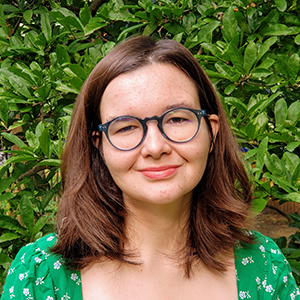
The results of this study though, seem to refute that. The research team found that there was almost no difference in kids’ ability to learn new nouns and verbs embedded in codeswitched and not codeswitched contexts. Additionally, language ability had only a very subtle impact on how code-switching affected learning, and it was in kids with advanced language ability. “The really important takeaway from this study is that kids were learning similarly, and above chance, in both the codeswitched and the single-language condition,” Libersky says. “And across nouns and verbs as well.”
Even though this is a small and preliminary study, the research team hopes that it can offer some reassurance to bilingual parents. While Kaushanskaya hesitates to make broad statements, this study suggests that kids are able to learn language accurately from codeswitched input and that parents should continue to talk to and engage with their children as much as possible. Codeswitching can be an important part of how bilingual people communicate and can have cultural roots as well depending on the languages being spoken. “If codeswitching is natural for you, something that is part of your communicative profile, and is part of what your community does, there is no reason right now, based on what we’ve found, to believe that it has a negative impact of children’s language outcomes,” Kaushanskaya says.
With this baseline laid out, the study team has several new questions to ask as they continue to build on this research. Slawny is taking a closer look at the processing costs involved with codeswitching and if there is evidence to suggest it impacts later learning difficulties.
For Kaushanskaya, Libersky, and the rest of the lab, they have three directions they are looking to take. They first want to study codeswitching in younger kids to see if their results hold true. This study was with four and five-year-olds and it is possible that codeswitching could have impacts on earlier language development that is mitigated by age. Next, they want to expand to more language combinations. They have already started some work with kids who are bilingual in Mandarin and English. “Codeswitching is something that fluctuates tremendously across bilingual communities and cultural groups,” Kaushanskaya says. “So, it may look very different depending on languages where codeswitching happens in a different manner or perhaps with a different degree of frequency.”
Lastly, they want to start more specific studies that look at codeswitching’s impact on kids with neurodevelopmental disabilities. Bilingualism, and codeswitching specifically, in kids with developmental disabilities is very rarely studied, leaving large gaps in the knowledge base. “Some autistic kids struggle with language but it is a very different profile than say a child with developmental language disorder,” Kaushanskaya says. “And because codeswitching is very socially contextualized, for autistic kids – for whom social communication is a core difficulty – they may respond to codeswitching quite differently than neurotypical children.”
The overarching hope for these findings is to help inform more effective interventions and therapies for bilingual kids who might be struggling with language learning and development.
Your support makes a difference. Donate now to advance knowledge about human development, developmental disabilities, and neurodegenerative diseases through research, services, training, and community outreach.