
Waisman Center researcher receives WARF-funded award to advance next generation of brain organoid research
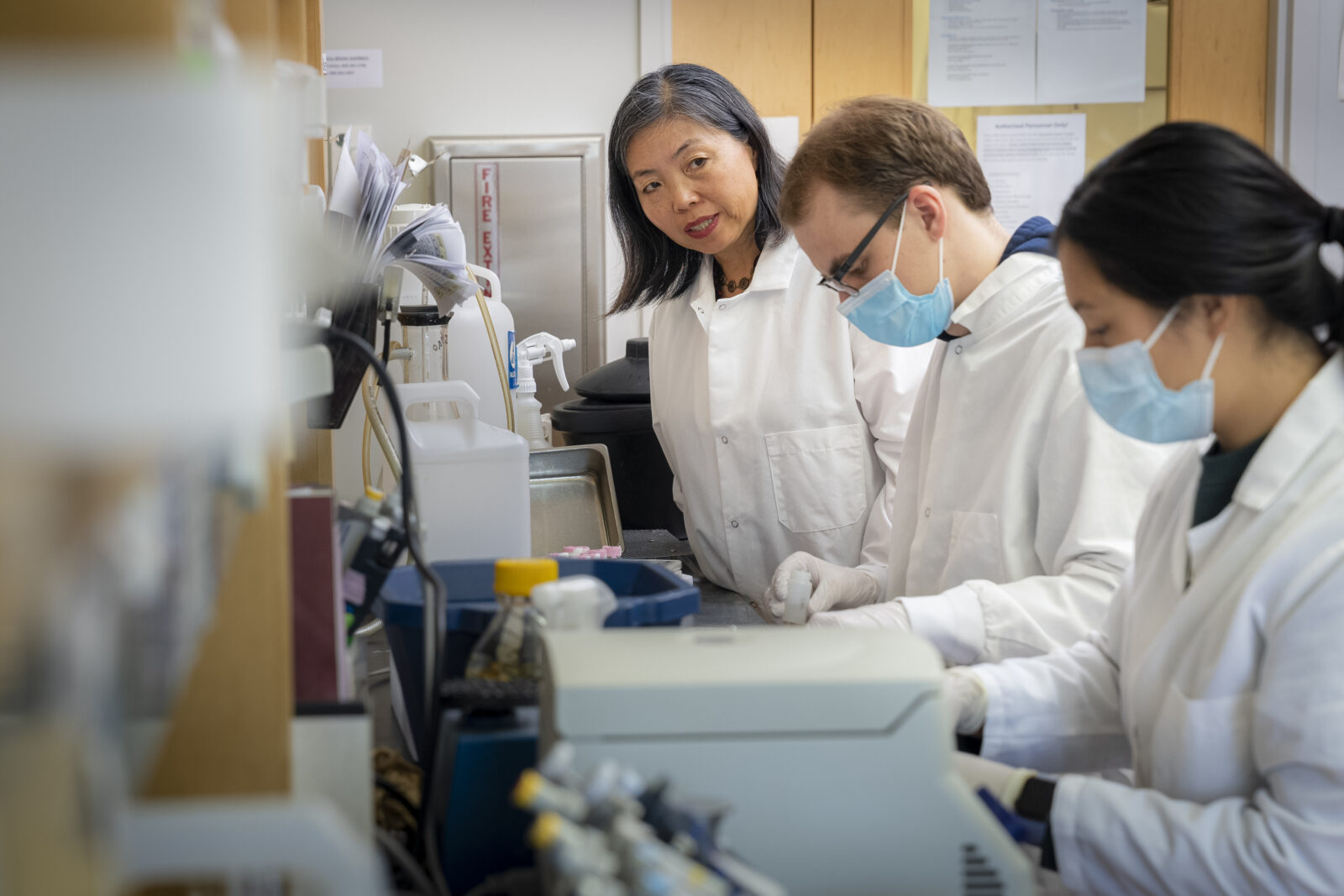
A University of Wisconsin–Madison interdisciplinary team led by Waisman Center investigator Xinyu Zhao, PhD, has received funding through the Wisconsin Alumni Research Foundation (WARF)-supported Igniting Interdisciplinary Innovation (I³) initiative to develop new methods for manufacturing and analyzing human neural organoids, miniature three-dimensional models of the human brain grown from stem cells.
This multidisciplinary collaborative project, “Scalable Manufacturing and Proximity Labeling-Enabled Proteomic Analysis of Single-Rosette Human Neural Organoids,” was selected as one of 17 teams to receive up to $250,000 in seed funding through the campus-wide initiative designed to spark innovative collaborations and position researchers for future large-scale funding opportunities.
Zhao, professor of neuroscience and a Waisman Center investigator, is collaborating with Randolph Ashton, associate professor of biomedical engineering, and Jeffrey Martell, assistant professor of chemistry, on the project. Together, the team brings expertise in neuroscience, stem cell biology, engineering, and chemical biology to address critical challenges in brain organoid research.
Human neural organoids have emerged as powerful tools for studying how the brain develops, understanding the biological roots of neurological and neurodevelopmental disorders, and testing potential therapies. However, widespread use of the technology has been limited by several obstacles, including high production costs, variability between organoids, and the inability to study proteins within specific cell types and cellular compartments.
The team aims to overcome these barriers by developing methods for the scalable manufacturing of highly reproducible single-rosette neural organoids and combining those advances with innovative proximity-labeling technologies that enable cell type-specific protein analysis over time. This approach will allow researchers to better understand how molecular pathways change during brain development and disease and help identify new therapeutic targets.
The project reflects the goals of UW–Madison’s Igniting Interdisciplinary Innovation initiative, which was launched in 2025 by the Office of the Vice Chancellor for Research with support from WARF. The program brought together hundreds of researchers from nearly every corner of campus to develop collaborative solutions to complex societal challenges. Approximately 292 researchers representing nearly 100 departments participated, resulting in 17 funded projects.
For Zhao and her collaborators, the award provides a unique opportunity to integrate cutting-edge manufacturing, engineering, and proteomic technologies into a next-generation organoid platform that could transform the study of neurological disease.
If successful, the project will make neural organoids more cost-effective and scalable for drug screening applications while enabling researchers to identify proteins and pathways involved in disorders of the developing brain.