
WI LEND secures five years of funding, expands training opportunities
By Emily Leclerc | Waisman Science Writer
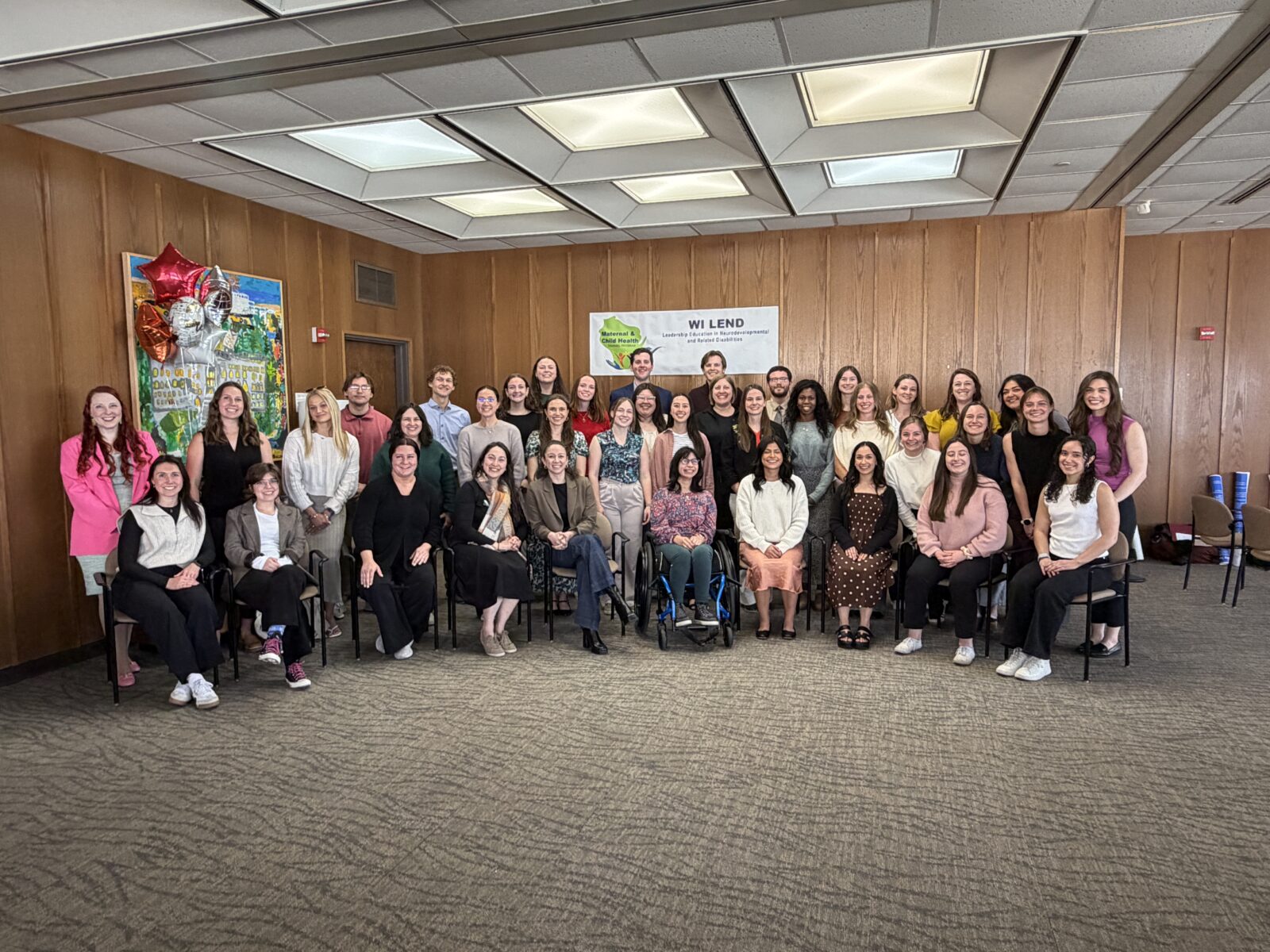
Training the next generation of researchers, clinicians, professionals, and advocates is central to the Waisman Center’s mission of improving the lives of individuals with disabilities and their families. A key part of that effort is the Wisconsin Leadership Education in Neurodevelopmental and Related Disabilities (WI LEND) program, housed within the Waisman’s University Center for Excellence in Developmental Disabilities (UCEDD). WI LEND recently received funding renewal from the Department of Health and Human Services’ Health Resources and Services Administration through a competitive grant process for the next five years alongside a new Pediatric Trainee Audiology Supplement to the program.
WI LEND provides advanced leadership and interdisciplinary training in intellectual and developmental disabilities to trainees across 15 different disciplines. For over thirty years, the program has prepared future professionals, self-advocates, and family members to work collaboratively, deliver coordinated services, strengthen systems of care, and improve outcomes for children and adults with disabilities. Continued federal support will allow WI LEND to build on its longstanding success while advancing Waisman’s broader mission to improve the lives of individuals with disabilities.
“What sets WI LEND apart is that people with developmental disabilities and their families aren’t just service recipients,” says Gail Chödrön, PhD, director of WI LEND and associate director of the UCEDD. “They are faculty, mentors, and fellow trainees. This renewed funding allows us to continue preparing professionals who know how to work alongside the people they serve.”
The new Pediatric Trainee Audiology Supplement will help WI LEND address gaps in care for children with intellectual and developmental disabilities that may be deaf or hard of hearing. In Wisconsin, there is a shortage of pediatric audiologists who have the necessary training and expertise to work with children with complex developmental needs. The new supplement will expand specialized training within WI LEND for audiologists to deliver complex interdisciplinary diagnostic and intervention services, disability-informed assessments, and family-centered counseling, as well as to improve early intervention systems and provide interdisciplinary leadership. The goal is to break down barriers that make it difficult for families to obtain necessary services and interventions for their child with intellectual and developmental disabilities who may be deaf or hard of hearing.
“Every WI LEND graduate carries what they learn here into a clinic, a school, a county program, or a leadership role somewhere in Wisconsin,” Chödrön says. “Renewed funding means new graduates will continue to build a network of professionals and leaders who are prepared both to provide quality care where families live and work and to work together to make sustainable improvements to our systems of care.”