
Students are the lifeblood of science: How students contribute to and shape research
By Emily Leclerc | Waisman Science Writer
At a Glance:
- At all levels of research students are crucial to the continuation of science as a whole. Science relies on the passing on of knowledge, expertise, and techniques. Students are the next generation of scientists that will continue to advance the field at large.
- It is a core responsibility of academic researchers to train students from undergraduate to graduate and postdoctoral.
- Research teaches more than just technical skills. It teaches how to make data-informed decisions, solve problems from beginning to end, critical thinking skills, and how to collaborate with others.
- Training in a research lab can also help students learn about themselves. Students learn to build confidence in their own capabilities, resiliency, and tolerance to failure.
Science is not static. It constantly grows through curiosity, experimentation, and the continuous pursuit of new knowledge. Every question asked, every experiment conducted, and every discovery made build upon what came before it—moving science forward step by step.
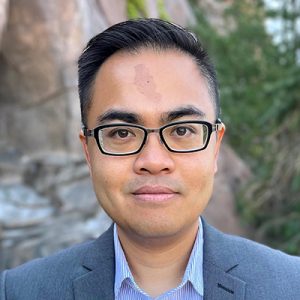
Their questions shape projects, their work drives experiments, and their perspectives help move ideas in new directions. “Every single person in my lab is integral to the work that we do,” says James Li, PhD, Waisman investigator and A. A. Alexander Professor of Psychology.
Graduate students often help define many of the questions labs are asking and help design and develop experiments to test them. Undergraduates contribute through data collection, general tasks that keep a lab running smoothly, and are integral parts of the work graduate students and the larger lab are doing. The importance of experienced investigators running cutting-edge research programs in collaboration with scientists worldwide cannot be overstated, but neither can the importance of students embedded in the work at every level.
Research requires a constant renewal and students bring energy, fresh ideas, and a diversity of perspectives. They are also the key to the continuation of science as a whole. Every advancement and discovery is built off of all that came before it and it is a core responsibility of academic researchers to train students across levels. “It is part of our duty to train the next generation of scientists. Having them in our lab to train them, prepare them for their future career, whether that’s academia or industry, is the duty of academic faculty. I consider it a necessity,” says Xinyu Zhao, PhD, Waisman investigator and Jenni and Kyle Professor of Novel Developmental Diseases.
At the Waisman Center, research focuses on intellectual and developmental disabilities and neurodegenerative diseases. Each year, hundreds of students train across more than 40 labs gaining experience in a highly collaborative, interdisciplinary research environment.
But students are not just important for their potential to become career researchers. “Everyone has something to learn and something to teach,” says Brittany Travers, PhD, Waisman investigator and associate professor of kinesiology. The perspectives students bring—regardless of how long they stay—shape projects and enrich the research environment.
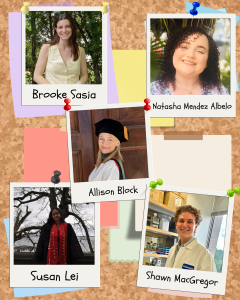
Being a student in a research lab means more than acquiring just technical skills. “I truly want my students to become lifelong researchers and that looks different for each of them. They don’t have to wear a lab coat or be knowledge generators. They don’t have to be principal investigators of a lab,” says Travers. “I see research as simply taking into account information, seeking information in the least biased way possible, and then making data-informed decisions.”
Brooke Sasia, a sixth-year clinical psychology PhD student in Li’s lab, takes that research way of thinking into many aspects of her work. “I’m able to bring an empirical lens to everything that I do, from research, to teaching, to clinical practice. I’ve learned to ask a lot of questions and am able to understand things from multiple perspectives,” Sasia says. Understanding what kinds of questions to ask as well as how to bring multiple sources of information together to make informed decisions is an incredibly useful skill in almost any space outside of the lab.
Research can provide hands-on, real-time lessons in both critical thinking and the ability to work closely with others. “Skills that translate from research to anything else are learning to collaborate effectively with your peers as well as those who might be senior to you. The other major skill that you get out of research is critical thinking,” says Li. “That can be hard in a classroom setting because it is so structured. Lab meetings are far less structured and more of an environment where you can voice a thought or opinion and work through it with information to back it up.”
Shawn MacGregor plans to continue with research after finishing his undergraduate degree in neuroscience. He is a senior now and has been with the lab of Waisman investigator Anita Bhattacharyya, PhD, associate professor of cell and regenerative biology, since his freshman year. He intends to pursue his PhD but can already see that if he were to leave research today, the ability to think his way through problems would be invaluable. “A huge thing is now understanding how to solve a problem from beginning to end. I’ve learned how to ask good questions and figure out and plan what steps I need to take to get the answer. And then once I’ve found the answer, what questions do I ask next,” MacGregor says.
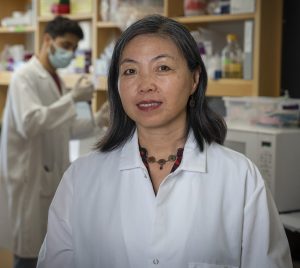
Training students requires a significant investment of time and mentorship. Postdoctoral fellows and graduate students often mentor undergraduates. Training the next generation is just a part of academic research but it also teaches how to respect the knowledge and time being given by mentors. “I want my students to know that teaching them takes out of their mentors’ time,” says Zhao. “So, they need to be very conscientious about that time and the effort being invested into them. They need to be accountable.”
Working in research also teaches resilience. Experiments fail. Manuscripts are rejected. Biological assays might be tedious. Progress can be slow and unpredictable. Learning to persist through setbacks is often as important as technical skill.
“I have become incredibly resilient,” says Natasha Mendez Albelo, PhD, recent doctoral graduate from Zhao’s lab. “Resiliency means having the mindset of if this fails it is not the worst. It isn’t the end of the world. I’ll just do it again. And if that doesn’t work then I’ll find an alternative approach and keep moving forward.”

For Susan Lei, postbaccalaureate research technician in Travers’ lab, her time as a research student has helped build confidence and leadership skills. Lei has been in Travers’ lab since her sophomore year of college and will be transitioning into training to become an MRI (magnetic resonance imaging) technician.
“I can be a leader when I need to be. When I first joined her lab, little sophomore me was just trying to get her bearings. But the longer I stayed the more I transitioned into a leadership role where I was gradually overseeing some training, running sessions, and administering various assessments we have for our projects,” says Lei. “I can be in the position of someone who has the answers.”
Students are essential to science not only because they become the next generation of researchers, but because of the contributions they make right now. In return, research shows students what they are capable of achieving. “It can feel very intimidating,” says Allison Block, a dual degree fourth year doctor of occupational therapy and PhD student in Travers’ lab. “But it has shown me that I am capable of so much more than I thought.”