

Not lost in translation: New research finds that kids can learn easily from codeswitched language
Codeswitching--when someone switches between two or more languages while speaking--is a very common phenomenon in people who are bilingual. ‘Spanglish’ is a well-known example of codeswitching as it is a colloquial term for speaking in a mix of Spanish and English.
March 11, 2026
The Waisman Center hosts a successful first Day with the Experts on Congenital Heart Defects
On the first day of Congenital Heart Defects (CHD) Awareness Week, Waisman Center and UW Health Kids experts gathered to share their knowledge on the neurodevelopmental outcomes of congenital heart surgery with the community.
March 10, 2026How AI is advancing medical research
Waisman Investigator Daifeng Wang, PhD, associate professor of biostatistics and medical informatics, was featured on this article by the School of Medicine and Public Health on how artificial intelligence (AI) is advancing medical research at UW.
March 10, 2026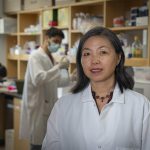
Waisman investigator Xinyu Zhao receives grant from the Eagles Autism Foundation
The Waisman Center celebrates the selection of Xinyu Zhao, PhD, a principal investigator renowned for her work in neural stem cells and neurodevelopment, as one of the esteemed recipients of a 2025 Eagles Autism Foundation research grant.
March 3, 2026
Beyond the bench: Waisman-born clinical trials
AT A GLANCE: The Long Journey of Clinical Trials – Scientific discoveries take years to become treatments. Researchers must prove safety and effectiveness through four trial phases, testing interventions on small groups before expanding to …
March 3, 2026
Understanding why individuals with disabilities continue to be left out of health research
Individuals with disabilities face significant health disparities, yet remain underrepresented in health research. There is substantial evidence that individuals with intellectual and developmental disabilities are systematically excluded from health research, even when it involves a condition that disproportionately impacts them.
February 24, 2026
Tribute to Frank L. Siegel, PhD
The emeritus professor of pediatrics and biomolecular chemistry passed away on January 1, 2026 at the age of 93.
February 17, 2026
Parents as partners: How a community advisory council highlights the importance of learning from lived experience in research
Researchers are increasingly recognizing what families have long known: lived experience is its own form of expertise.
February 12, 2026
Finding connection: The struggles and strengths of building relationships for individuals with autism
Relationships are hard. It’s part of why there are countless books, podcasts, and blog posts about how to build, maintain, and keep relationships.
February 10, 2026James Li receives Vilas Associates Award
James Li, PhD, Waisman Center investigator and A.A. Alexander Professor of Psychology and Psychiatry, has been selected to receive a Vilas Associates Award.
February 10, 2026
Study shows prenatal alcohol exposure may shape drinking behavior later in life
Prenatal exposure to alcohol may increase the risk of problematic drinking in adulthood according to a new 20 year-longitudinal study done in primates.
February 4, 2026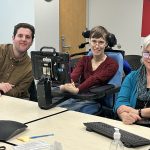
From Lived Experience to Leadership: Jack Hoselton’s Advocacy Journey with WI LEND
Jack Hoselton strives to improve society for people with disabilities. His own lived experience as a man with autism gives him an understanding of the disability world, its strengths and its challenges.
February 3, 2026
How LEND training shaped a Waisman CASC clinician’s approach to inclusive care and communication access
Becca Stroschein realized while volunteering as an undergraduate student at a non-profit for autistic adults, that she held a deep passion for helping others find a form of communication that works for them so that they can have access to their community.
February 3, 2026
Early adversity strongly predicts adult mental health challenges in people with Down syndrome, new study finds
A new Waisman study found that adverse childhood experiences (ACEs)—such as abuse, neglect, or exposure to household challenges—can have lasting effects on adults with Down syndrome, including their mental health and ability to cope with life changes. While ACES are known to impact the general population, this research is among the first to show similar—and in some cases heightened—effects in individuals with Down syndrome.
January 15, 2026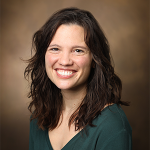
The newly funded Autism Research Consortium seeks to accelerate timely access to care for autistic individuals
Researchers at the Waisman Center’s University Center for Excellence in Developmental Disabilities (UCEDD) were recently awarded a grant from the Health Resources & Services Administration (HRSA) to support research to improve the health and well-being of children and youth with autism.
January 8, 2026
In memoriam, Paul Rathouz, former Waisman executive team member and collaborator
Paul Rathouz, PhD, former Chair of the Department of Biostatistics and Medical Informatics, passed away from complications of multiple myeloma on Wednesday afternoon, December 10, 2025. Paul served with distinction as the chair of the Department of Biostatistics and Medical Informatics from 2010-2017. He will be missed by those who knew him.
December 16, 2025
How advanced MRI paired with neuropsychological testing shed light on how Temple Grandin’s brain processes the world
Temple Grandin, PhD, is likely the most well-known living autistic individual, both nationally and internationally.
December 1, 2025
The Baby Badger Network seeks to make genetic testing more accessible to critically-ill newborns throughout Wisconsin
In Wisconsin, a new initiative is transforming the landscape of neonatal care by making genetic testing more accessible for critically-ill newborns.
November 20, 2025
Waisman Early Childhood Program’s longest serving teacher retires
The Waisman Early Childhood Program’s (WECP) longest serving teacher, Lisa Marie Carilli-McCord, officially retired at the end of October.
November 3, 2025
New algorithm helps decipher complex biological data to advance neurodevelopmental research
A new machine learning algorithm developed at UW-Madison is helping researchers untangle a complex puzzle: the molecular mechanisms behind developmental disabilities and neurodegenerative diseases. COSIME, created by the lab of Waisman investigator Daifeng Wang, PhD, associate professor of biostatistics and medical informatics, and computer sciences, offers a powerful new way to integrate and interpret multiple types of biological data which can give scientists a clearer view of how different cellular clues come together to shape disease outcomes.
October 21, 2025
Waisman Center investigator David Gamm featured in a Capital Times story about research funding
Waisman Center investigator David Gamm, MD, PhD, is featured in a story from the Capital Times about research funding from the U.S. Department of Defense. Gamm is the director of the McPherson Eye Research Institute …
October 16, 2025
New research reinforces the link between a cellular quality control system and rare forms of autism
Just like a car factory relies on inspectors to ensure that every vehicle is built correctly, cells depend on internal quality control systems to keep proteins functioning as they should. New research from Waisman Center investigator Luigi Puglielli, MD, PhD, professor of medicine at the University of Wisconsin-Madison, reveals that disruptions in one such system—the endoplasmic reticulum’s acetylation pathway—can lead to rare forms of autism and progeria, offering fresh insights into the cellular roots of these complex conditions.
October 16, 2025
A tribute to Paul White: Champion of community, compassion, and change
Paul White, MA, founder of Community TIES and former director of the Waisman Center’s Community Outreach Wisconsin program, passed away unexpectedly on June 17, 2025.
October 13, 2025
New research suggests mixing languages during study session might be a more effective learning method
A new paper from the lab of Waisman investigator Margarita Kaushanskaya, PhD, professor of communication sciences and disorders at UW-Madison, provides evidence that suggests when trying to learn two languages, studying them both during the same session rather than separately might be the more beneficial strategy.
October 8, 2025
Lily Wagner on researching, diagnosing and treating autism
Waisman Center Autism and Developmental Disabilities Clinic Director Lily Wagner considers the Trump administration’s warnings about acetaminophen and approval of leucovorin as a treatment for autism. By Frederica Freyberg | Here & Now September 26, …
October 1, 2025
Waisman’s Summer Research Opportunity Program gives undergraduate student real-world experience in academic research
Each summer, the Waisman Center hosts undergraduate students with lived experience of a disability as a part of its Summer Research Opportunity Program.
September 30, 2025
Wisconsin researcher responds to White House autism announcement
Since that press conference on Monday afternoon, numerous medical organizations have pushed back, saying acetaminophen is safe for pregnant women to use
September 26, 2025
As Trump warns of danger with acetaminophen, autism community calls for support, not cure
Natalie Eilbert Milwaukee Journal Sentinel At 40, Erin Miller takes solace in the ordinary joys of life. She goes on nature walks, watches the seasonal butterflies, enjoys a good bowl of ice cream, and plays …
September 24, 2025
Turning passion into progress: How former LEND trainee Ashlee Parker helps young students thrive
LEND is a special training program funded by the federal Maternal & Child Health Bureau of the Department of Health & Human Services.
September 4, 2025
Undergraduate student research experience is an integral part of the Zhao lab
By Anoushka Kar The Zhao lab at the University of Wisconsin–Madison is an exciting and dedicated research entity in neuroscience which focuses on brain development and developmental disorders. It offers opportunities to students of any …
August 29, 2025
New study shows nuanced and complex relationship between tau and brain cell loss in Alzheimer’s Disease
At a Glance Loss of synapses, the connections between neurons that allow them to communicate, is a primary driver of cognitive decline in Alzheimer’s disease. Researchers expected a strong connection between synapse loss and tau …
August 28, 2025
Integrating trauma awareness into early language support
Learning language in early childhood occurs through interaction between children and their caregivers. It is a foundational process that allows children to participate in social interactions, learn from the world, and develop other essential skills such as literacy. Having a language delay or disorder is associated with greater risk for experiencing trauma and vice versa. Furthermore, children’s and caregivers’ trauma histories can impact their individual strengths and needs related to participation in early language intervention.
August 25, 2025
Friends of the Waisman Center annual awards 2025
The Friends of the Waisman Center present awards each year to Waisman students, staff, and and family volunteers.
August 22, 2025
As new fiscal year looms, Wisconsin disability rights groups brace for major funding cuts
By Natalie Eilbert The Milwaukee Journal Sentinel Key Points Wisconsin disability rights groups are concerned about potential funding cuts in the 2026 federal budget. Disability Rights Wisconsin may lose funding for programs related to voting rights, …
August 19, 2025
Atypical infant movements tied to cerebral palsy may signal differences in brain connectivity
Brain connectivity differences linked to atypical infant movements may aid the early prediction of cerebral palsy development after a perinatal brain injury, a new Waisman Center study shows.
August 15, 2025- More News posts
Advancing knowledge of human development, developmental disabilities, and neurodegenerative diseases.