
New book shares the experiences of individuals with disabilities through the COVID-19 pandemic using photos
By Charlene N. Rivera-Bonet | Waisman Science Writer
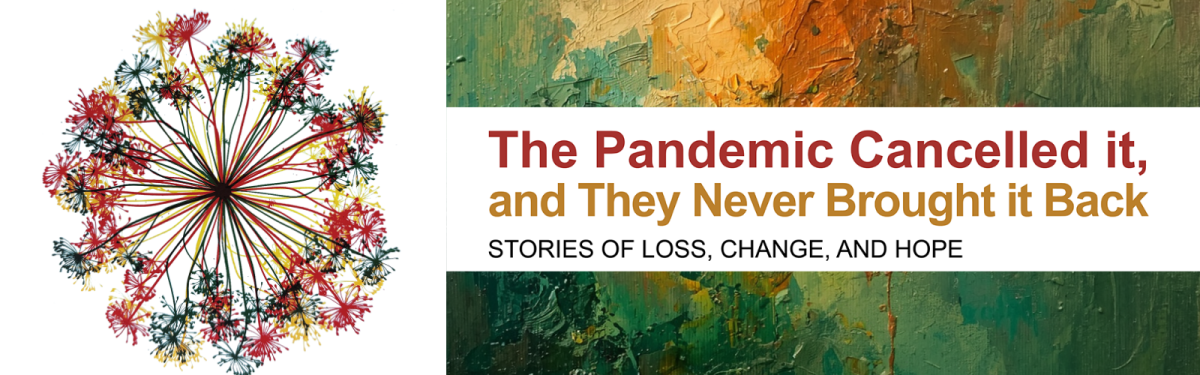
The Pandemic Cancelled It, and They Never Brought It Back takes readers into the daily lives of individuals with intellectual and developmental disabilities during the COVID‑19 pandemic, using their own photographs and words to reveal moments of loss, adaptation, resilience, and connection. Created by researchers at the Waisman Center, the book offers an intimate portrait of a community whose experiences are too often overlooked.

The book, authored by Waisman investigator Karla Ausderau, PhD, OTR, FAOTA, and Jennifer Capelle, OTD, was born from a study that looked at the impact of COVID-19 in the daily lives of people with intellectual and developmental disabilities in the state of Wisconsin, and the need to share all of their stories more widely. The book serves two purposes: sharing their research findings in an accessible way, and elevating the stories of individuals with intellectual and developmental disabilities with a tool that can be used for advocacy in their communities.
The stories are presented using photovoice, a research method that allows participants to answer research questions using photos, rather than words, to represent their experiences, ideas, and community. It is a method historically used with populations that have been marginalized, and Ausderau and her group adapted it to align with the needs of individuals with intellectual and developmental disabilities. The photos can also be supplemented with narrated stories. “Using a combination of pictures and their stories, we were able to get a very well-rounded opportunity to share their experiences,” Ausderau explains.
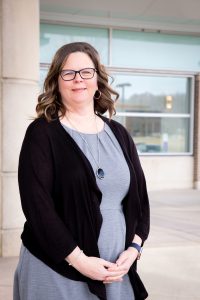
Edward Kastern and Marquis Garner, who wrote the forward of the book, are part of Ausderau’s research team who, in addition to collecting and analyzing data, offer their perspectives as someone with lived experiences.
They were both instrumental in the research process that led to the book. “They were particularly important because they helped us think about the questions that we were
developing and the best way to collect the data,” Ausderau says. “And they helped us pilot it and did their own [photovoice] and went through the process with us.”
“I think I brought my own perspective of being a researcher, being a Black male, and having a disability. I was able to bring a lot of different components of what I was feeling on the inside and to the project,” Garner, who has autism, says.
The book, Ausderau explains, shows the complexity of how the COVID-19 pandemic impacted people with disabilities and the duality of their experience, finding silver linings even through a challenging experience. Through the book, the individuals take readers into their homes, kitchens, work places, churches, favorite libraries, and more, using photos they took or had someone take of them.

They photographed what they lost, such as the empty space of the library where the book club used to meet. But also, what they gained, like new hobbies such as cooking and learning to play the piano. “It’s very complex. People describe tremendous loss and lack of agency. But even in such times, they were incredibly resilient with finding ways to be advocates and being able to still create meaningful occupation and activity,” Ausderau says.
They included photos of how they stayed in touch with loved ones, the places they frequented like church, or the zoo. And the measures they took to stay healthy, such as wearing masks, and washing their hands.
“I know for photovoice I would go to church with my grandma to take pictures. And I believe I would write under what I did, kind of like a storyboard,” Garner explains.

and Edward Kastern
Kastern says the book allows readers to go into the space of someone with an intellectual and developmental disability and have a deeper understanding of their experiences. “It can really make you think of things you never thought of. I’ll give you an example,” Kastern says. “You don’t know what it’s like being in a wheelchair like me, or you don’t know what it’s like to have autism…You kind of had to get into their world or their realm for a while. And so, it made you learn more about them, to appreciate them, and what they bring to the table.”
Garner, through working on the book, found that many of the challenges he faced during the pandemic were shared by others. “You realize that, ‘hey, I’m not the only one with this problem’,” he says. “Someone reading the book will realize that we’re all human, and we all are trying to strive, I think, for the same thing, and to be loved and accepted and be part of a society,” Garner adds.
The hope Ausderau, Garner, and Kastern share is for the book to amplify the voices of those with intellectual and developmental disabilities and to be a tool for guiding policy and support in times when services and support for them are under threat. “This book is going to be used in multiple different ways to educate a lot of people,” Kastern says. “It’s going to be used to educate lawmakers and people with intellectual disabilities, to give them an avenue and to give them a voice and to give them hope as we go into the future.”
A Gallery Walk displaying selected works from the photovoice book can be found at the John D. Wiley Conference Center Hallway of the Waisman Center.
