
Waisman Center to pilot Adult Autism Program this summer
By Charlene N. Rivera-Bonet | Waisman Science Writer
At a Glance:
- Starting Summer 2026, the Adult Autism Program will offer individual and group services focused on mental health, life skills, and social connections.
- Will support autistic adults 18 years and older and their families, with no age cap.
- Aims to help build state-wide capacity on care for adults with autism by training mental health care and other providers across Wisconsin.
- Led by Madeline Barger, MS, LMTF, BCBA, CST.

This summer, the Waisman Center’s University Center for Excellence in Developmental Disabilities (UCEDD) will pilot the Adult Autism Program, with services focused on mental health, life skills, and social connections for supporting quality of life in autistic adults and their families. The program will incorporate group, individual, and family services, as well as state-wide capacity building for providers, addressing the gap in services and supports for autistic adults and their families throughout the state of Wisconsin.
In Wisconsin and nationwide, there is a significant shortage of coordinated and evidenced-based services specific for autistic adults. “There’s what we call the service cliff that happens when people are 18 to 21,” says Madeline Barger, MS, LMFT, BCBA, CST, Adult Autism Program director. It refers to when individuals with autism transition into adulthood and lose the established support systems they had through high school. “They still have the same needs. They still have developmental differences. They’re neurodiverse. But services are not available anymore,” Barger adds.
According to the Centers for Disease Control and Prevention (CDC), 1 in 31 children are diagnosed with autism. Research predicts that, as those children continue to age, the number of adults with autism will double in the next decade, making this an urgent issue.
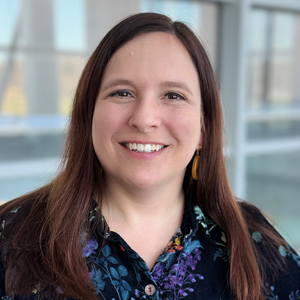
The new Adult Autism Program will support autistic adults 18 years and older with no age cap with a focus on individuals with significant barriers to accessing care. It will offer evidence-based group and individual services focused on family and individual mental health, life skills, and social connection, three factors that impact quality of life for autistic individuals.
While the end goal of the services is improving quality of life, what the process and outcome will look like is determined by the individual and their families. Services will be tailored to each individual’s goals, interests, and abilities, and adapted to their specific needs. For example, individuals may want to work on life skills such as figuring out transportation, learning how to cook their own meals, developing daily routines, managing finances, or planning for retirement.
“I’m very interested in making sure that we are supporting individuals and families across the full range of adulthood. We might have groups for people and families where the autistic person is in their 40s or 50s or 60s. We are preparing to serve a wide range of the lifespan, and then across the full spectrum of autism,” says Leann DaWalt, PhD, director of the UCEDD.
Currently, the Waisman Center serves adults with autism in a limited capacity through supporting their augmentative and alternative communication (AAC) needs, and behavioral consultation through Community TIES. Family Navigator Michelle Schumacher, MSSW, also fields phone calls with requests for guidance in finding services for autistic adults. This family navigation service will continue to expand through the Adult Autism Program so that autistic adults or family members in Wisconsin can call and access resources.

“Our hope is to integrate the new services that are going to be offered with the services and initiatives that are already happening here at the Waisman Center,” DaWalt says. “Another goal is for these services to be integrated with the exciting research that’s happening here for autistic adults and their families.”
The Waisman Center’s Intellectual and Developmental Disabilities Research Center (IDDRC) houses multiple research labs, including the Lifespan Family Research lab led by DaWalt and Marsha Mailick, PhD, emeritus vice chancellor for research and graduate education, that study different aspects of autism in adulthood. The cutting-edge services offered through the Adult Autism Program will build on the foundation and expertise on autism across the life course originally developed at the center. “Much of the research related to adults on the autism spectrum was either started here or has been conducted by people who trained here at the Waisman Center,” DaWalt says. “The Waisman Center really is the home for much of the internationally-recognized research on adulthood and autism. We have that strong base of scholarship and knowledge.”
With the expertise of Waisman clinicians and the innovative research on autism in adulthood conducted at the center, the Adult Autism Program will be able to offer evidence-based, cutting-edge mental health interventions along with support for building daily life skills for autistic adults. By developing these services as replicable systems, the new program will be a template for other places to adopt. “It’s not just a program. It’s a model. It’s a model of a program that can be replicated, that is evidence-based, that is good for the community or the state that you’re in, and that other programs can adopt,” Barger says.
Barger and other Waisman Center experts will also offer training and consultation to mental health care and other providers across Wisconsin to help build state-wide capacity on care for adults with autism. “This is a population that many mental health providers have no experience with or very little,” says Gail Chodron, PhD, associate director of the UCEDD and parent of an autistic adult. “What we need is for mental health services and supports for autistic adults to improve and be more available in the whole state.”
Adults with autism spectrum disorder have significantly higher rates (around 80%) of co-occurring mental health diagnoses such as depression, anxiety, bipolar disorders, schizophrenia, and obsessive-compulsive disorders.
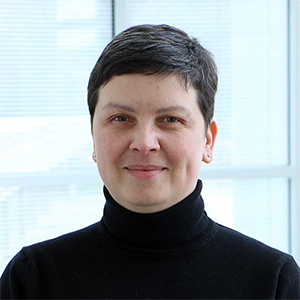
Chodron’s autistic daughter was hospitalized after an event of psychosis that, Chodron says, might’ve been prevented had providers known how to disentangle psychosis from autistic behaviors. “Untrained providers may confuse autism symptomology with mental health symptomology as not only is there overlap in some symptoms’ presentations, but there are also unique symptom presentations. Autistic adults report high rates of misdiagnoses, especially when the provider is unfamiliar with autism in general or how autism presents in the life of their client,” Barger explains.
Chodron’s daughter was attending UW-Whitewater at the time of the crisis. “I certainly want the Waisman Center to play a role in offering services that are cutting-edge, and then also play a role in making sure it’s getting out there so no matter where my daughter decides to live in the state, she can get that too,” Chodron says.
In Schumacher’s experience as a family navigator, mental health resources become even more limited in rural areas. The goal is for the program to address the lack of care due to inaccessibility. “[Schumacher] does amazing work helping, listening to people, talking through what their challenges are and sending them places, but there aren’t a ton of places they can go. So, it’s a systems approach to supporting people who need help, but also training more people so that there’s more than one door a person can walk through to get what they need in our state,” Barger says.
The program is currently being developed by Barger and an interdisciplinary team of colleagues and is set to launch in early 2027. They are currently holding listening sessions and partnering with autistic adults, along with family members and organizations that support them, to build a program that is tailored to their needs and preferences.
For more information on the program, or how to connect, click here.