
Down syndrome poster fair and research symposium will honor the Dewey family
By Charlene N. Rivera-Bonet | Waisman Science Writer
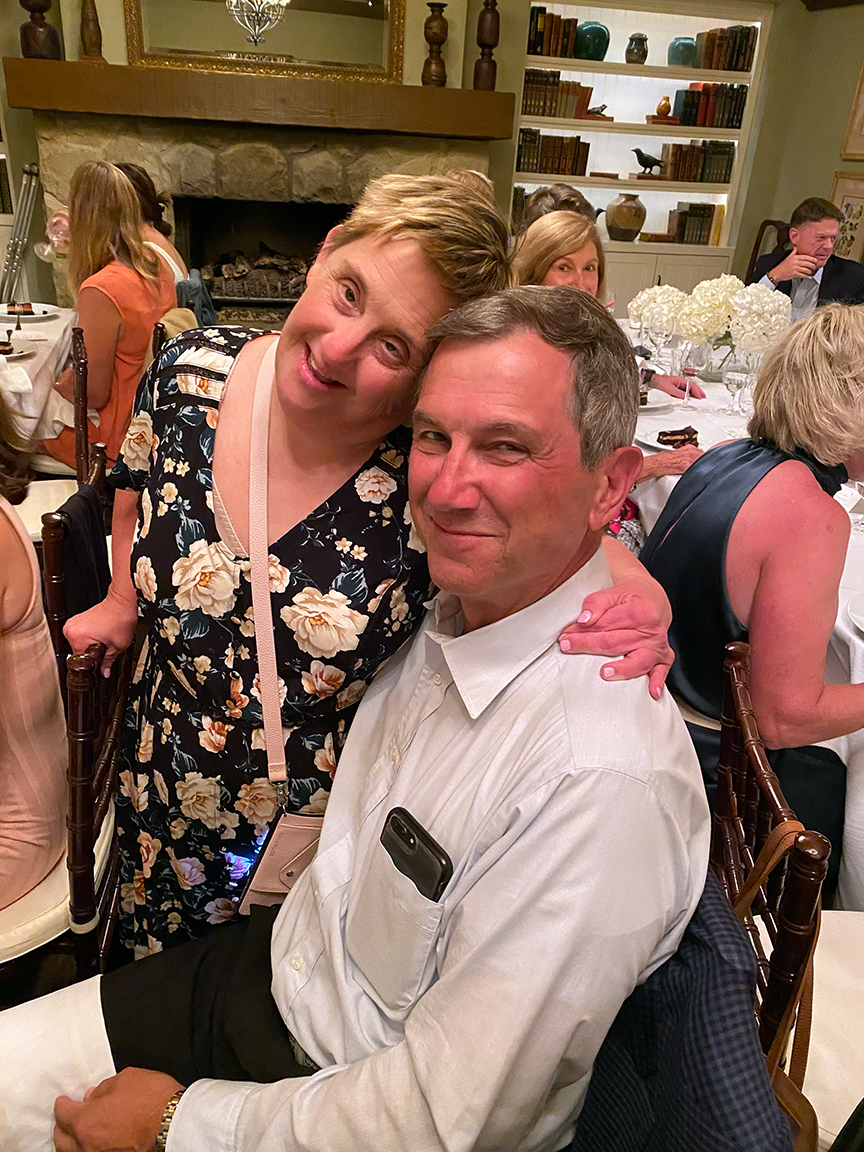
In honor of Annie Dewey, her brother Walter, and their mother Nancy, the Waisman Center will be celebrating its inaugural Dewey Family Lecture on Down Syndrome Research, along with a poster fair and a symposium highlighting Down syndrome research at the Waisman Center and beyond. The event seeks to recognize the significant contributions of the Dewey family to Down syndrome research, and bring together researchers in the field to present their work and foster new research collaborations.
The two-day event will take place at the Waisman Center on Thursday, November 5 and Friday, November 6.
The contributions of the Dewey family to Down syndrome research are multifaceted, from research participation to research funding and counsel. Annie, who has Down syndrome, has been participating in research at the Waisman Center for more than a decade. Through the Alzheimer Biomarker Consortium – Down Syndrome (ABC-DS) study, Annie’s research participation helps unveil the course of Alzheimer’s disease in individuals with Down syndrome.
Alongside Annie, her mom Nancy and late brother Walter have also played a significant role in the advancement of Down syndrome research at the Waisman Center. In 2008, inspired by Annie, Walter joined the center’s Board of Visitors, becoming a vital bridge between the center and the broader public. For more than 15 years, his leadership helped solidify the Waisman Center’s reputation for excellence in translational research and interdisciplinary care. He maintained this role until his passing in 2025.
In 2022, the Dewey family established the Ann Dewey Down Syndrome Catalyst Fund. Their financial contribution has helped make strides in Down syndrome research by supporting pilot projects that might otherwise go unfunded. “It really is to jumpstart projects, and so far, some of them have been successful in garnering federal funds,” says Anita Bhattacharyya, PhD, associate professor of cell and regenerative biology, who was awarded the first round of the catalyst fund along with André Sousa, PhD to study how reduced expression of the synapse-related gene cerebellin-2 during prenatal development may contribute to fewer synapses and intellectual disability in Down syndrome.
Since then, this gift has sparked numerous scientific innovations in our understanding of Down syndrome. Other investigators that have received these funds include Brad Christian, PhD, Janet Lainhart, MD, and Barbara Bendlin, PhD, to explore the connections between the gut microbiome and brain health; Xinyu Zhao, PhD, for screening genes in chromosome 21 that contribute to cellular dysfunction in Down syndrome; Doug Dean III, PhD, and Audra Sterling, PhD, to research early brain and language development; and Andy Alexander, PhD, Sigan Hartley, PhD, and Ruth Litovsky, PhD, for studying the role of hearing loss in Down syndrome on auditory function, cognition, language, and brain structure.
Some of these research projects, alongside many other studies focused on Down syndrome, will be presented during the Poster Fair and Symposium by students, postdoctoral fellows, and scientists from Waisman and beyond. “[At the Waisman Center] we have research ranging from stem cells to imaging of adults with Down syndrome, and while we know each other, this is an opportunity for us to hear really what everyone is doing,” says Bhattacharyya, who has led the planning of the event alongside Sigan Hartley, PhD, 100 Women Distinguished Chair in Human Ecology and Vilas Distinguished Achievement Professor.
The event’s two keynote speakers are leaders in the field and their research in Down syndrome is moving toward clinical trials. Following each keynote speaker, there will be a series of talks by Waisman investigators highlighting the breadth of Down syndrome research at the center.
“The benefit of the symposium is that we can bring students, postdocs, faculty, and scientists together who are studying Down syndrome, and all have the goal of improving health and quality of life, but are coming at this from different disciplinary lenses and using different methods,” Hartley says. “This event will give us time together to learn from one another. Hopefully, this will set the stage for new interdisciplinary research collaborations to address big bold problems of importance to the Down syndrome community,” she adds.
“The contributions of the Dewey family to Down syndrome research are palpable and fruitful, and this event is an opportunity to honor their impact, showcase some of those fruits, and promote an environment where new research ideas and collaborations can brew,” says Qiang Chang, PhD, director of the Waisman Center
Going forward, the Dewey Family Lecture on Down Syndrome Research will remain an annual named lecture that will continue to honor the Dewey family and their contributions to the advancement of research in Down syndrome.