A springboard for scientific independence: Inside Waisman’s T32 Postdoctoral Training Program
By Emily Leclerc | Waisman Science Writer
At a Glance:
- Postdoctoral fellowships provide additional training to individuals with a doctorate. The Waisman Center’s postdoctoral training program provides such training to support early career researchers in successfully launching independent research careers in intellectual and developmental disabilities.
- Waisman’s program supports four postdocs per year and is funded by the National Institutes of Health (NIH) through a T32 Training grant. This grant is intended to – enable institutions to recruit individuals for research training in fields where there is a shortage of researchers with the goal of growing the workforce of researchers who can have a significant impact on that field.
- Each postdoctoral fellow works with their mentor to design a tailored training plan that will grow their knowledge and research skills. All postdocs participate in the program’s core professional development curriculum which involves grant writing, ethics training, and seminars on intellectual and developmental disabilities.
- An important part of the training program is exposing the postdocs to Waisman’s interdisciplinary research atmosphere, where they can learn team science approaches that involve working with a group of researchers who come from multiple disciplines, all relevant to intellectual and developmental disabilities. Interdisciplinary science is key to answering many of the questions facing the intellectual and developmental disabilities community.
- Alums of Waisman’s T32 program say that their training at Waisman was crucial to getting them where they are today. Several said they likely would not be where they are today without that training.
Postdoctoral fellowships occupy an unusual space between being a graduate student and becoming an independent scholar. The postdoc stage is marked by a focus on refining research skills, expanding their knowledge-base, and developing key professional development skills (e.g., grant writing) needed to be an independent scientist. It can feel at times, like a second adolescence: a transitional phase defined by learning new skills, exploring new areas of research, and supported independence.
Though not a required experience in all disciplines, postdoctoral fellowships can provide a crucial staging ground where researchers polish their skills, clarify their research identity, and prepare for independence.
At the Waisman Center, postdoctoral training is intentionally designed to support this transition. The Waisman Postdoctoral Training Program focuses on preparing researchers for impactful careers in the field of intellectual and developmental disabilities. Emphasizing interdisciplinary training, the program integrates social, epidemiological, behavioral, and biobehavioral approaches to studying intellectual and developmental disabilities.
The program is funded by the National Institutes of Health (NIH) through a T32 training grant (2T32HD007489-31), a competitive mechanism to support training in priority research areas. T32 grants are awarded only to institutions with strong research infrastructure and demonstrated commitment to training the next generation of leaders. “We always say the NIH invested in us to train the future generation of research leaders in intellectual and developmental disabilities,” says Sigan Hartley, PhD, director of the T32 program, Waisman investigator, and 100 Women Distinguished Chair in Human Ecology.
Unlike postdoc appointments that are housed within a single lab, T32 programs invest in the trainee themselves and prioritize independent research development, deliberate professional growth, and sustained mentorship. The Waisman Center’s Postdoctoral Training Program in Intellectual and Developmental Disabilities Research has been a T32 funded program since 1995.
Training new scientists is central to the Waisman Center’s mission. Intellectual and developmental disabilities is an understudied area and one of the ways Waisman can work toward improving the lives of individuals with disabilities is by shepherding high-quality researchers into the field. The structure of a T32 program is well-suited to that goal.
Waisman’s T32 postdocs are each paired with a mentor (an investigator at the Waisman Center) and gain hands-on research training by engaging in ongoing research studies led by their mentors and also working with their mentors to analyze secondary data and/or design new studies. “The goal is to expose postdocs to cutting-edge and rigorous research and provide opportunities for the postdoc to lead data analyses, be the first author of manuscripts, and build their scientific and community presentation skills. This ultimate focus is to help the postdoc carve out their own area of specialization within the field of intellectual and developmental disabilities and build a track record of success in this area,” says Hartley.
Alongside Hartley and their mentor, each postdoc identifies a set of goals for their postdoc. “We put a lot of thought into these goals,” says Hartley. “Postdocs complete what we call an individualized development plan, which involves working with their mentor to identify the specific skills they want to develop during their training and the activities that they will do gain these skills. Activities can include things like enrolling in workshops, presenting at conferences, learning new statistical approaches, and joining journal clubs.”
In conjunction with the individualized training plans, all postdocs participate in a core curriculum focused on grant writing, research ethics, and broader professional skills such as how to give a job talk and how to negotiate salary and research startup funds. Grants are the backbone of academic research as they are a primary source of funding. Over the two-year program, the trainees work toward preparing a full grant proposal ready for submission. This is an essential step toward research independence.
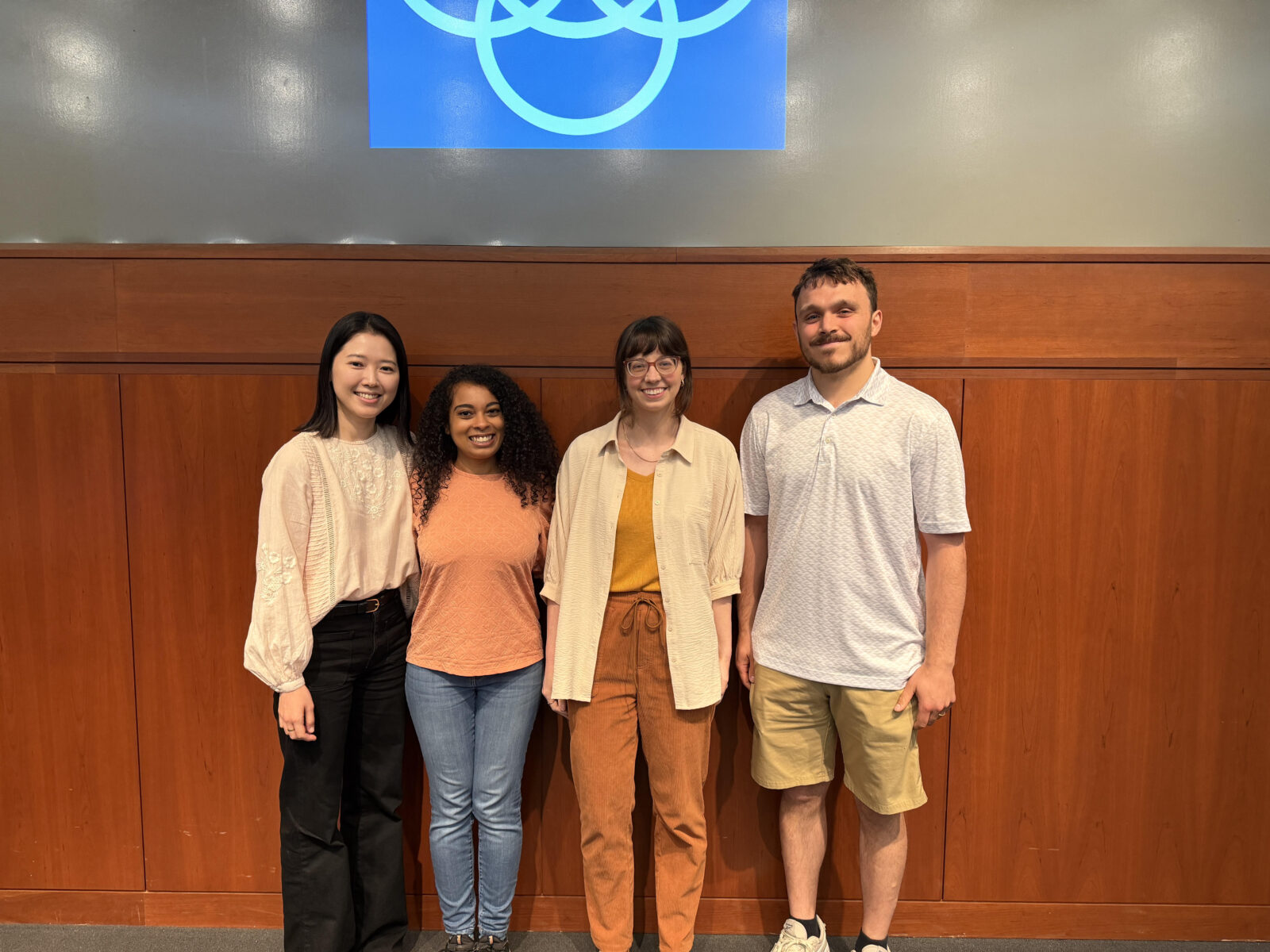
“The grant writing course, which I am in right now, is a big piece of the T32 training. In my second year, I’m hoping to get a grant proposal submitted and maybe even accepted, dare I say,” says Nick Cottam, PhD, first year postdoc in Waisman’s T32 postdoctoral training program. “That is a major goal which will make the next phase or step in my career much more feasible.”
The required seminars on scientific ethics are just as important of the Waisman T32 training. Research involving human participants or animal models requires careful ethical consideration. “The seminars teach postdocs about how to be an ethical and socially responsible scientist and what that means in the field of intellectual and developmental disabilities,” says Hartley.
A unique strength of Waisman’s postdoctoral training program is its balance of depth and breadth. While postdocs receive specialized training tailored to their research goals, they are also immersed in Waisman’s deeply interdisciplinary environment.
“In order to truly understand and address the questions that are most pressing for the intellectual and developmental disabilities community, we need interdisciplinary science. If we are interested in understanding how to improve the metabolic health of people with Down syndrome, for example, we need researchers who study this at a genetic level using mouse models, researchers who study this at a molecular level using blood in humans, and researchers who study this by assessing behaviors and lifestyle factors to come together,” says Hartley. “That team science thinking provides people with the skillset to work with experts across disciplines and be leaders in the intellectual and developmental disabilities field. The uniqueness of our T32 program is both its focus on intellectual and developmental disabilities – the questions we ask are aimed at improving the health and quality of life of people with intellectual and developmental disabilities – but also because of how we go about asking these questions – using interdisciplinary approaches. Thus, we try to expose postdocs to research that is being done from a variety of disciplines all focused on intellectual and developmental disabilities.”
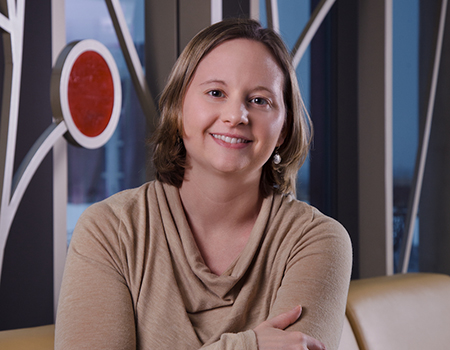
This interdisciplinary focus is part of how Emily Schworer, PhD, research associate in Hartley’s lab, was able to secure the position she is moving into in a few months. Schworer graduated from Waisman’s T32 program in 2024 and has stayed on at the Waisman Center as a developmental scientist to conduct research as part of the grant she submitted during her time as a T32 postdoc. She recently accepted an assistant professor position at Cincinnati Children’s Hospital and the K99/R00 Pathways to Independence NIH grant that she submitted while a T32 postdoc is moving with her into her new position.
“Because of my time at the Waisman Center, I’m able to incorporate biomarker research and brain imaging into my projects, which were never a part of my research before coming here. It has opened up whole other branches of research for me,” says Schworer. “I have my main project, but I also have so many other related research activities going on around it that makes my work really fun. Now I can go in a lot more directions with my work, which is nice to be able to start a career with.”
Mentorship, networking, and peer support tie the program together. Postdocs learn not only how to conduct research, but also how to mentor others—a core responsibility of academic scientists. Postdocs learn from their mentors and are also given opportunities to mentor undergraduate and graduate students. “I had the opportunity to take a research mentor course through the Delta Program at UW–Madison so I had some undergrad mentees that I was able to work with during my time here, which was great,” says Melissa Jenkins, PhD, second year Waisman T32 postdoc. “I really appreciate the mentoring infrastructure in place here. And as a mentee myself, having that structure has allowed me to get a full understanding and knowledge of the up-to-date and recent research in the realm of intellectual and developmental disabilities.”
The program also emphasizes relationship-building and collaboration. This expands upon the program’s interdisciplinary focus, encouraging postdocs to talk to, learn from, and collaborate with researchers from across fields.
“One of the biggest things I’ve learned is that there is always an alternative way to look at things. I say that because, I cannot see myself being able to conduct effective research that is beneficial for the community of folks with disabilities if I am not only engaging but incorporating multiple perspectives,” says Jenkins. “This just isn’t work that can be done on someone’s own.”
As a part of that connection building, and as a way to create peer support in the program, Waisman deliberately takes on a cohort of postdocs. This builds in a support system so that the postdocs have others around them that are in similar places in their careers. It is another decision designed to create a connected and collaborative research community that can ask and answer important questions for the intellectual and developmental disabilities community.
“One of the things that’s been really beneficial, is the social network that is here,” says Liz Ancel, PhD, first year Waisman T32 postdoc. “From day one, where there was a cohort already here reaching out and saying welcome to Waisman and checking in on me. We are all at slightly different points with our careers and job searches and hearing them talk about where they’re at, how they got here, and how everything is going has been really nice.”
The program’s long-term impact is reflected in the careers of its alumni. Many go on to lead independent research programs, and nearly all credit their time at Waisman as foundational. “My enthusiasm for the program endures even 13 years after I left,” says Matt Maenner, PhD, now chief of the CDC’s Child Development and Disability Branch.
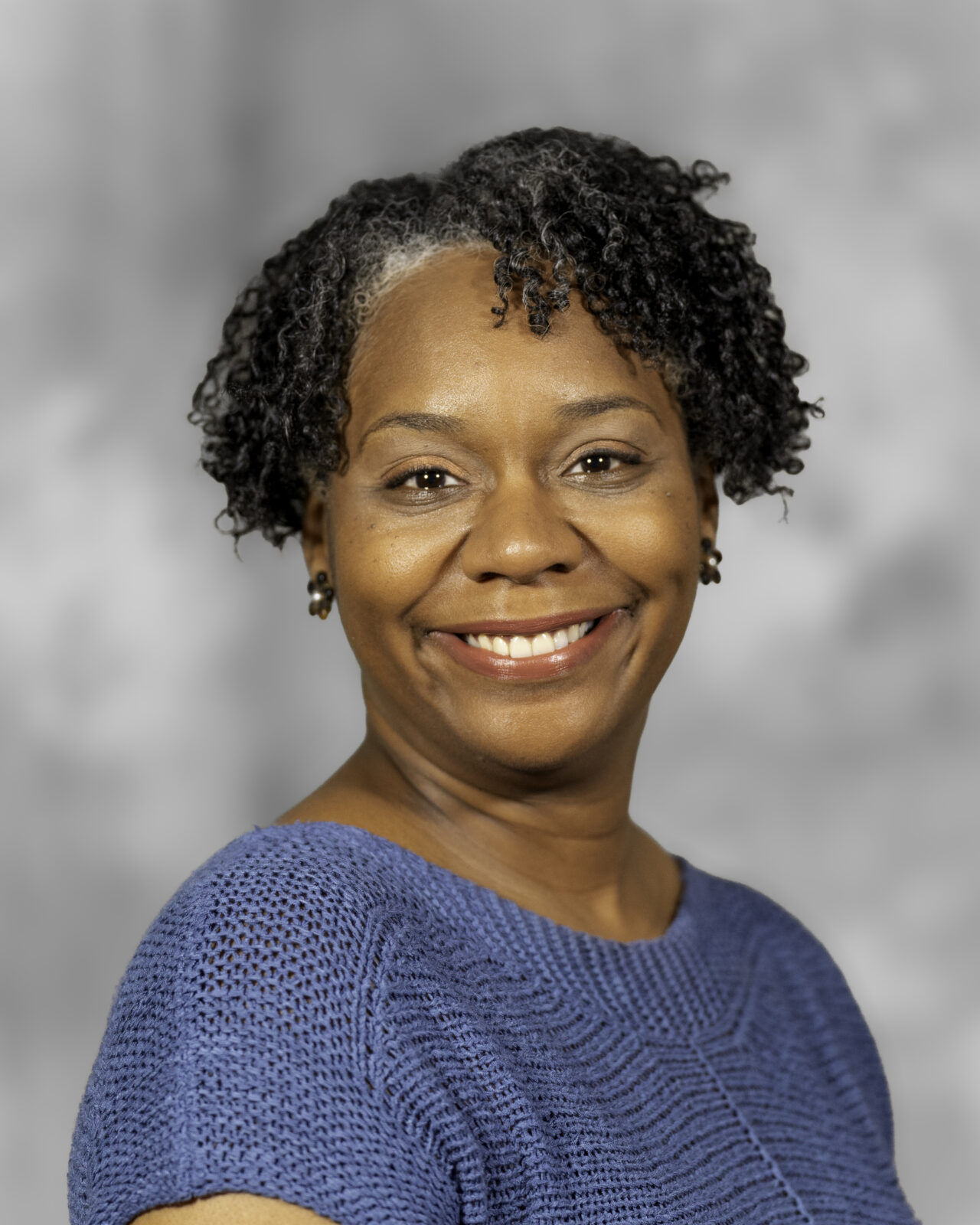
For Monique Mills, PhD, CCC-SLP, BCS-CL, professor of communication sciences and disorders at the University of Houston and director of the Child Language Ability Lab, her T32 training set her up to be a good mentor and teacher. “It was a really special time that really paved the way for how I now train students. Being at the Waisman Center really set me up to be able to teach language development to undergrads in a way that seamlessly incorporates research,” says Mills. “Jenny Saffran’s work (Saffran, PhD, is a longtime Waisman investigator) is all over the classes I teach and it’s great that I can say she was one of my mentors in an earlier part of my career. The T32 honestly is the gift that keeps on giving.”
Maenner looks back at his time at Waisman and marvels at how many of the lessons he still carries with him. The interdisciplinary exposure and training of the T32 program has been instrumental for him throughout his time at the CDC alongside the extensive professional development the program is centered around.
“I think the thing that ultimately changed me by doing the postdoc, in addition to broadening and deepening my scientific interests, is it gave me the tools to think about bigger changes, to propose new things, to lead bigger efforts, and think about how to be successful in making things happen,” says Maenner. “That probably put me on this track where I am now leading the science and not just in the trenches as an analyst on a team. I think a lot about how the additional professional development and maturation and perspective I gained through the T32 gave me the tools early on to navigate and think about what is possible here.”
Somer Bishop, PhD, professor of psychiatry at the University of California, San Francisco’s Weill Institute for Neurosciences, says that similarly to Mills, Waisman’s T32 program shaped the kind of mentor she is today. Now having her own postdocs to train, Bishop relies heavily on her experiences working with a variety of different people at the center. All the different mentors and peers she had during her training has contributed to her being able to be an effective advisor for all different kinds of students.
And even with the years in between being a T32 postdoc and where she is today, Bishop will be moving to a new professorship at Stanford University in July, she continues to maintain relationships and collaborations with the cohort of postdocs she trained with.
“The people who were in my year, and the years below and above me, are my lifelong colleagues and friends. I still work with almost everyone that I encountered during the postdoc program,” says Bishop. “It is definitely set up to do that as the ideal, but it really worked for me. I feel so lucky because these people have been my wonderful collaborators for almost two decades. The Waisman Center is just a really special place because everybody’s in the same building and people really care about each other and what they’re doing.”