
RNA-binding protein identified as key regulator of brain development
By Charlene N. Rivera-Bonet | Waisman Science Writer
At a Glance:
- The lab of Xinyu Zhao, PhD, identified FXR1, an RNA-binding protein, as key regulator of human brain development.
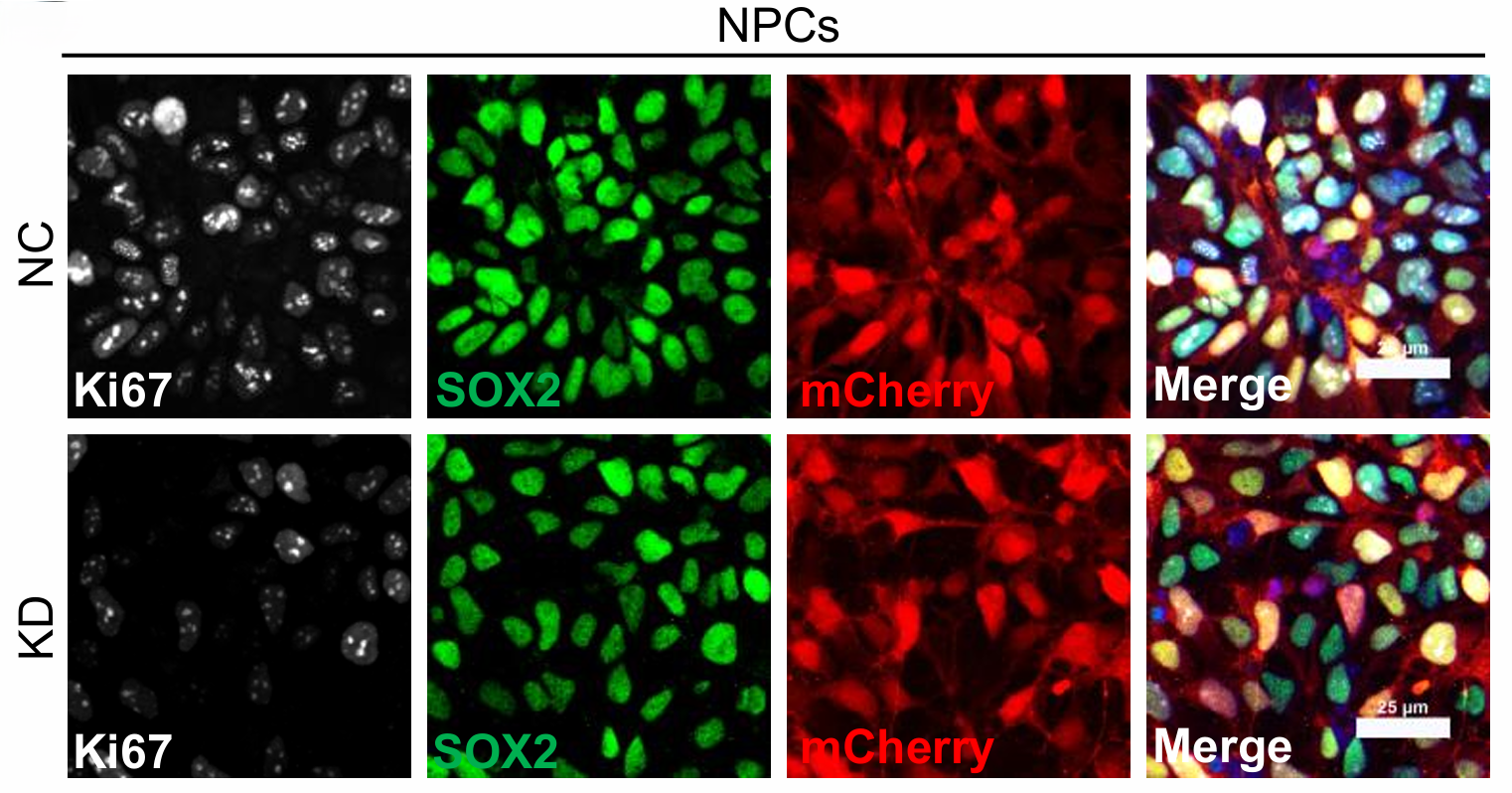
- FXR1-deficient neural progenitor cells show impaired neuronal differentiation.
- FXR1 binds the mRNA of HMGB2 to destabilize it, the absence of FXR1 leads to more HMGB2.
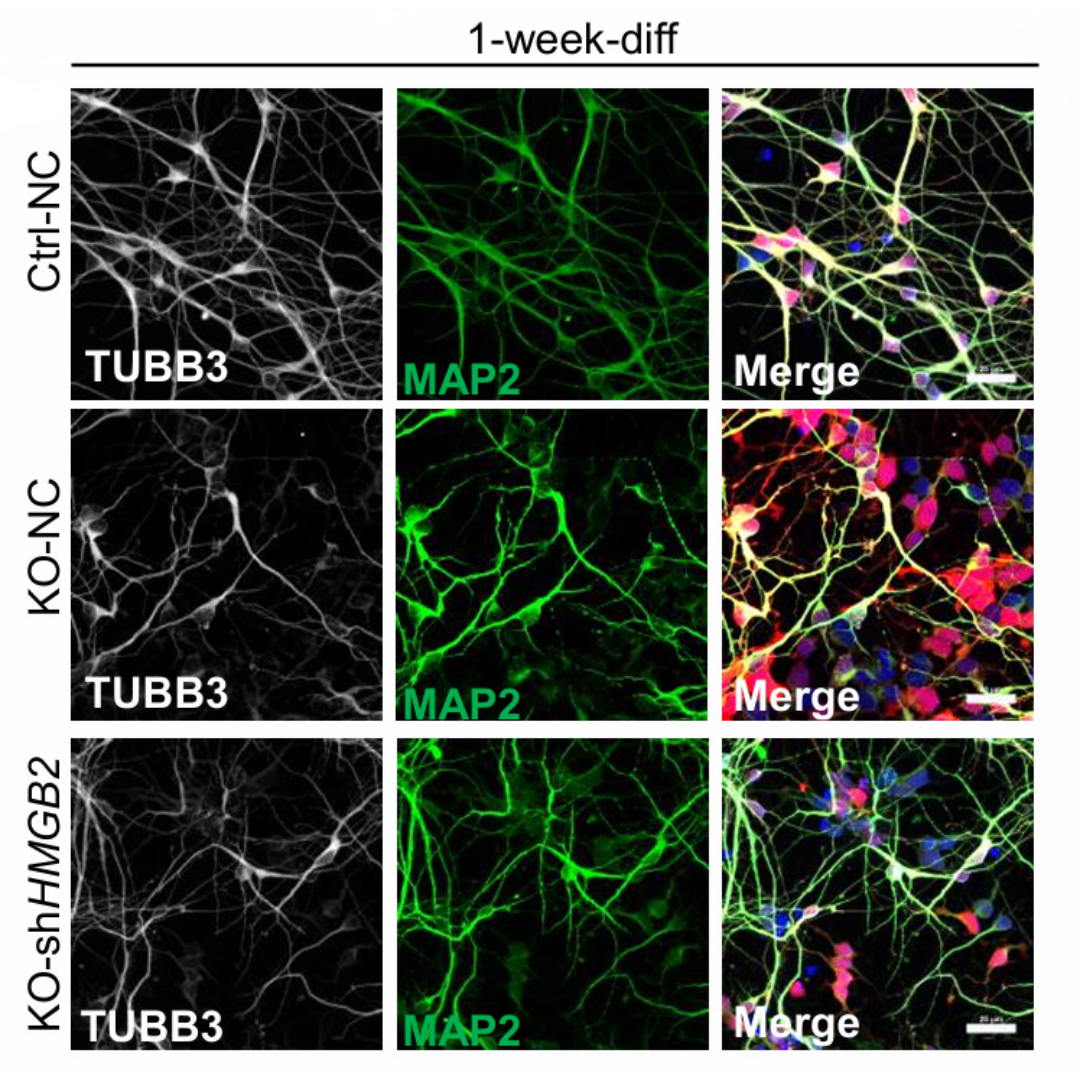
- Reducing the levels of HMGB2 restores typical neuronal differentiation in FXR1 deficient cells.
Brain development is a finely-tuned process that requires precise transition from progenitor cells into the brain cells they are programmed to become. Disruptions to this well-orchestrated cell fate process may lead to neurodevelopmental disorders. A new Waisman Center, University of Wisconsin–Madison study has identified a critical regulator of this early process of cell fate called FXR1, a protein that binds RNA to regulate the abundance of key genes.
The study, published in Stem Cell Reports by the lab of Xinyu Zhao, PhD, Jenni & Kyle Professor in Novel Neurodevelopmental Diseases, is the first to show the critical role of FXR1 in early human development.
FXR1 is an RNA-binding protein, meaning it can bind messenger RNA to stabilize or destabilize it, therefore regulating the abundance of this RNA in the cells and its availability for protein production. “Our goal was characterizing how RNA binding proteins may regulate neurodevelopment throughout different neurogenic stages,” says Natasha Méndez-Albelo, PhD, former graduate student in Zhao’s lab who led the study. Finding key regulators of neurodevelopment, she says, may lead to a better understanding of how brain development works, and inform new treatments for neurodevelopmental conditions.
FXR1 is part of a ‘trifecta’ of homolog proteins that also include FMRP and FXR2. Of this group, FMRP has received the most attention as a full mutation of its gene leads to fragile X syndrome. Until now, it was believed that FXR1, FXR2, and FMRP had similar functions and bound mostly the same mRNAs. “But in our study, when we deleted each one in cultured cells, we saw very different effects on the neuroprogenitors,” Zhao says. “How they proliferate and differentiate. So, we became really interested in understanding specific functions of these RNA binding proteins in neurodevelopment.”
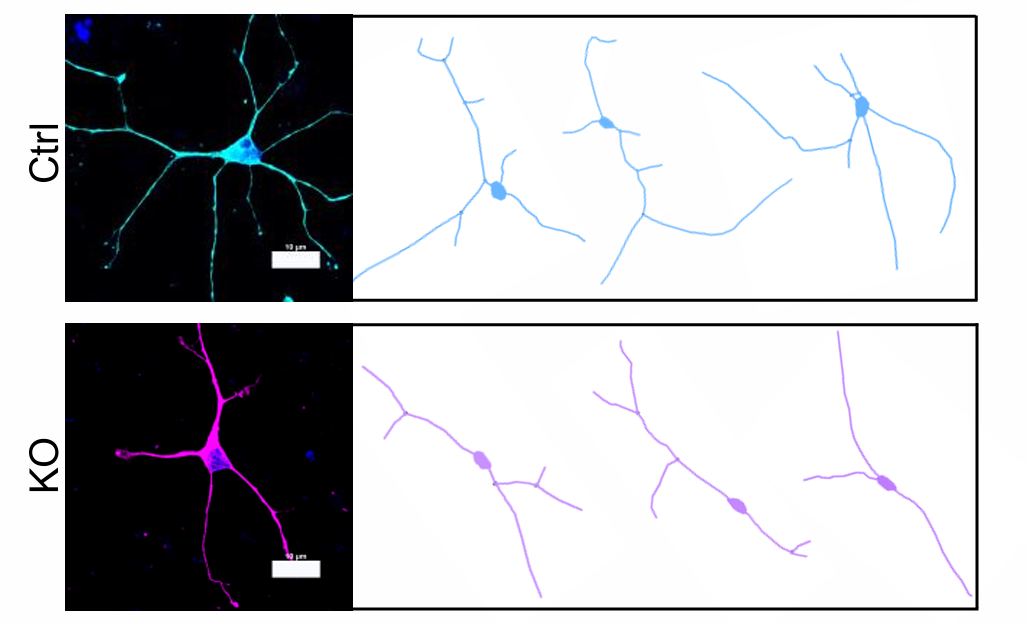
In order to understand the role FXR1 plays in brain development, Méndez-Albelo created FXR1-deficient human induced pluripotent stem cells (hiPSCs) and differentiated them into neural progenitor cells and neurons. The absence of FXR1 led to drastic impairments in cells including deficient proliferation, neuronal differentiation, morphological maturation, and neuronal activity at different stages of neurodevelopment. “We did not expect such a drastic phenotype at all” Méndez-Albelo explained.
Taking a step back to understand the mechanisms of the impairments caused by FXR1 deficiency, they found a specific target of FXR1 called HMGB2 to be upregulated in FXR1-deficient neural progenitor cells. FXR1, they show, directly binds HMGB2 mRNA in neural progenitor cells to make it unstable, while another RNA-binding protein, HuR, had the opposing effect of stabilizing it. In the absence of FMR1, levels of HMGB2 go up.
Reducing the levels of HMGB2 in FXR1-deficient cells restored typical neuronal differentiation in the neural progenitor cells, indicating that FXR1 may be working to control the abundance of genes that are important for neurodevelopmental processes. “It shows that there’s a network of RNA binding proteins that actually control cell fate,” Zhao says.
Although no direct link has been found between FXR1 and neurodevelopmental conditions, FXR1 has been shown to interact with proteins associated with autism spectrum disorders, and has been identified as a high confident risk gene for schizophrenia and other psychiatric disorders. “I think in order to keep moving the neurodevelopmental disorder field forward and finding treatments, we need to take a step back and study how actually neurodevelopment works,” Méndez-Albelo says. “That will help us understand which are the key regulators, and then we can help create treatments,” she adds.
As a follow up to this study, Zhao will use organoids, three-dimensional cell clusters grown from stem cells, to study the role of FMR1 in neurodevelopment using a model that more closely mimics the brain environment.
This study has been funded by the National Institutes of Health (NIH), SciMed, and, the Stem Cell & Regenerative Medicine Center (SCRMC) Training Award. Méndez-Albelo received predoctoral fellowship awards from SciMed and SCRMC.