

How advanced MRI paired with neuropsychological testing shed light on how Temple Grandin’s brain processes the world
Temple Grandin, PhD, is likely the most well-known living autistic individual, both nationally and internationally. She is not only a renowned scientist and educator but also an esteemed author and advocate. Across the decades of her life, she has spent considerable time on her personal pursuit of knowledge and understanding about autism and the ways that it influences her perception and interpretation of the world around her. As a Distinguished Professor of Animal Science at Colorado State University, her professional pursuits involve studying animal behavior and, in particular, designing humane livestock-handling systems.
December 1, 2025
New study shows nuanced and complex relationship between tau and brain cell loss in Alzheimer’s Disease
At a Glance Loss of synapses, the connections between neurons that allow them to communicate, is a primary driver of cognitive decline in Alzheimer’s disease. Researchers expected a strong connection between synapse loss and tau …
August 28, 2025
Improved assessment protocols identify cerebral palsy earlier
Research from the Pediatric Neuromodulation Lab of Bernadette Gillick, PhD, MSPT, PT, at the Waisman Center showcases that evidence-based assessments for cerebral palsy (CP) are helping to improve diagnostic timelines and access to therapies and interventions.
March 26, 2025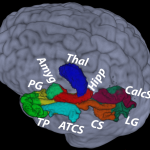
Memory impairment after severe traumatic brain injury in adolescents related to size and connectivity changes in the hippocampus and beyond.
Memory impairment as a result of a traumatic brain injury (TBI) has long been associated solely with the hippocampus, the brain’s learning and memory center. However, new research published in the journal Brain Imaging and Behavior, reveals that the hippocampus is not acting alone.
October 9, 2024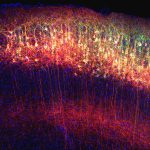
UW-Madison’s Cool Science Image Contest: Waisman winners
Matt Zammit, PhD, Waisman scientist in the Brain Imaging Core, and affiliate investigator Erik Dent, PhD, are both winners of UW-Madison’s Cool Science Image Contest.
October 4, 2024
New research first to test 60-year-old theory on autism
Autism is often associated with complex tasks like social processing and language and the later-developing brain regions that control them. But what if autism is more rooted in the earliest developing and most reflex-like part of the brain – the brainstem?
March 28, 2024
Developing a neural network to overcome the biggest enemy of MRI scans: movement
Movement is the arch nemesis of MRI (magnetic resonance imaging) scans.
January 17, 2024
Study reveals differences in brain structure for older autistic adults
A recent study continues to add to the body of evidence that the brain structure of autistic individuals is different from the structure of neurotypical individuals.
January 8, 2024
UW effort to map Down syndrome brain raises prospect of treatment for disorder
In a lab near UW Hospital, Megan Jandy grows stem cells from people with Down syndrome — 10 batches of cells, most in three-dimensional clusters, each batch featuring one group with the extra chromosome that causes the disorder and one group without it.
October 24, 2023
The beginnings and evolution of brain imaging at the Waisman Center
The development of brain imaging techniques has helped us understand emotion, intellectual and developmental disabilities, and neurodegenerative diseases in ways we could not before.
August 1, 2023
Sensory responses in autistic children are linked to a small under-explored region tucked deep down in the brain called the brainstem
The same external sensory stimulus – a flashing light, a hug, or hearing one’s name – can provoke a different reaction in every person.
April 5, 2023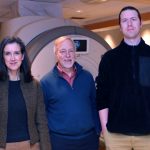
Waisman investigators receive grant to improve brain imaging in young children
A team of investigators at the Waisman Center was recently awarded a $2.5 million grant from the Eunice Kennedy Shriver National Institute of Child Health and Human Development at the National Institutes of Health to both improve brain imaging techniques for infants and build a quantitative atlas of typical early brain development.
January 23, 2023
Study shows differences between brains of primates — humans, apes and monkeys — are small but significant
While the physical differences between humans and non-human primates are quite distinct, a new study reveals their brains may be remarkably similar. And yet, the smallest changes may make big differences in developmental and psychiatric disorders.
November 9, 2022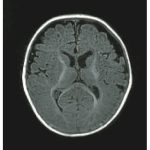
Understanding recovery and development in children
Early interventions in children with cerebral palsy can be pivotal to improving motor and cognitive outcomes. The focus of this study is to longitudinally assess, over the first two years of life, the recovery and development of the infant brain after early stroke or brain bleed.
November 2, 2022
Videojuego enseña balance, reduce síntomas en adolescentes autistas
Si bien el entrenamiento de balance puede no parecer divertido para la mayoría de los adolescentes, los videojuegos generalmente sí lo son.
January 11, 2022
Video games teach balance, reduce symptoms in autistic adolescents
While balance training may not necessarily sound fun to most adolescents, video games typically do. And for adolescents with autism spectrum disorder, video games that improve their balance by teaching them yoga and tai chi poses also improves their posture, reduces the severity of their autism symptoms and influences the structure of their brains.
January 6, 2022
UW-Madison es clave en estudio emblemático enfocado en el desarrollo del cerebro infantil y el impacto del abuso de substancias y el estrés en niños e infantes
La Universidad de Wisconsin-Madison (UW-Madison) será una de las 25 instituciones que estudiarán el desarrollo temprano del cerebro y comportamiento, y el impacto de la exposición temprana a substancias – como opioides – y estresores sociales en niños e infantes. Esta nueva iniciativa, Cerebro y Desarrollo Infantil Saludable (HBCD, en inglés), es liderada por los Institutos Nacionales de Salud (NIH, en inglés) y el Helping to End Addiction Long-termSM Initiative of the National Institutes of Health (NIH HEAL InitiativeSM).
December 6, 2021
Genetics has a higher influence on brain microstructure development than the environment
Brain structure isn’t always the first thing that comes to mind when we think about what we inherited from our biological parents or share with our siblings. We mostly think about facial features, hair color, and even personality.
November 17, 2021
Studying the connection between Alzheimer’s and Down syndrome for Down syndrome awareness month
By Emily Leclerc, Waisman Science Writer The month of October is Down Syndrome Awareness Month and is dedicated to not only raising awareness about Down syndrome but also to celebrating the abilities and accomplishments of …
October 19, 2021UW-Madison is key site on landmark study focused on early childhood brain development and the impact of substance abuse and stress in infants and young children
The University of Wisconsin-Madison will be one of 25 sites to study early brain and behavior development and the impact of early exposure to substances – such as opioids – and social stressors in infants and young children.
October 6, 2021- More Brain Imaging posts
Advancing knowledge of human development, developmental disabilities, and neurodegenerative diseases.